

Howdy folks, new member here. A recent injury has me sidelined from tennis this season, so I'm reviving some of my old audio hobbies for a while. Hopefully I'll bring some some interesting material to the table in the coming months. This intro will be a little long-winded to give some context.
Over the years, in preparation for transferring to digital some of the 70's/80's analog master tapes from my musician/REP days, I've been modding my tape decks, A/D and D/A converters with good results. But it's time to look a little deeper. At any given time, I have a decent selection of useful measurement tools at my disposal.
All of my machines still have the standard LM78xx and 79xx regulators (yuk) in them, so I decided to look into replacing them with LM317 and 337 types. First to get the treament will be the Sony 670 DAT machine (with many mods) that I use for D/A.
It's obvious from the 317 data sheet that the programming resistors, adjust bypass cap, and output cap have a huge impact on performance - both noise and output impedance. The output cap needs to be big to deal with the rising impedance with frequency, no issue there. But the optimum value range for the others has some tradeoffs. For ±15V output, the manual suggests values of 120/1k3 || 10uF. Steve Sandler suggested something like 240/2k7 || 82nF for phase margin and stability, with good measurements to back it up. And in an old article, Jung used 1k/11k || 100uF for lowest noise. Three very different approaches, optimizing different parameters. Obviously they can't all be "right."
So I set up to measure the noise of these program resistor/adjust capacitor combos, using an Amber 3501a with 30kHz lowpass filter engaged. (All have 1000uF || 1k2 ohms to ground on the output.)
240/2k7 || 82nF (82uV)
120/1k3 || 10uF (40uV)
1k/11k || 100uF (30uV)
Given the huge noise difference, I rejected the first one and decided to try the two others in the D/A: first 120/1k3 || 10uF, and then 910/9k1 || 100uF. Listening impressions compared to the 78xx/79xx:
On the first set: cleaner bass and mids, more aggressive highs. Some improvement but nothing I could live with.
On the second set: Even tighter/cleaner bass and mids, but a very aggressive "glare", like a broad boost the 2k-3k region. Good for radio but definitely nothing I could live with.
Obviously, broadband noise doesn't tell the whole story. Back to the data sheets. First observation is how my listening impressions resembled the output impedance curves. I don't have anything right now that will measure impedance with DC present. But the correlation of noise and output impedance that the manual suggests is very interesting. If true, then measuring the noise spectra should give clues to the output impedance too. So I set up to see the noise spectra of these combos. An FFT analyser is the right tool for this job, but unfortunately the only one I have right now doesn't have a sensitive enough input range to be useful, so I had to make do with the trusty HP 3580A, which has a great front end.
Dinner time - to be continued...
Over the years, in preparation for transferring to digital some of the 70's/80's analog master tapes from my musician/REP days, I've been modding my tape decks, A/D and D/A converters with good results. But it's time to look a little deeper. At any given time, I have a decent selection of useful measurement tools at my disposal.
All of my machines still have the standard LM78xx and 79xx regulators (yuk) in them, so I decided to look into replacing them with LM317 and 337 types. First to get the treament will be the Sony 670 DAT machine (with many mods) that I use for D/A.
It's obvious from the 317 data sheet that the programming resistors, adjust bypass cap, and output cap have a huge impact on performance - both noise and output impedance. The output cap needs to be big to deal with the rising impedance with frequency, no issue there. But the optimum value range for the others has some tradeoffs. For ±15V output, the manual suggests values of 120/1k3 || 10uF. Steve Sandler suggested something like 240/2k7 || 82nF for phase margin and stability, with good measurements to back it up. And in an old article, Jung used 1k/11k || 100uF for lowest noise. Three very different approaches, optimizing different parameters. Obviously they can't all be "right."
So I set up to measure the noise of these program resistor/adjust capacitor combos, using an Amber 3501a with 30kHz lowpass filter engaged. (All have 1000uF || 1k2 ohms to ground on the output.)
240/2k7 || 82nF (82uV)
120/1k3 || 10uF (40uV)
1k/11k || 100uF (30uV)
Given the huge noise difference, I rejected the first one and decided to try the two others in the D/A: first 120/1k3 || 10uF, and then 910/9k1 || 100uF. Listening impressions compared to the 78xx/79xx:
On the first set: cleaner bass and mids, more aggressive highs. Some improvement but nothing I could live with.
On the second set: Even tighter/cleaner bass and mids, but a very aggressive "glare", like a broad boost the 2k-3k region. Good for radio but definitely nothing I could live with.
Obviously, broadband noise doesn't tell the whole story. Back to the data sheets. First observation is how my listening impressions resembled the output impedance curves. I don't have anything right now that will measure impedance with DC present. But the correlation of noise and output impedance that the manual suggests is very interesting. If true, then measuring the noise spectra should give clues to the output impedance too. So I set up to see the noise spectra of these combos. An FFT analyser is the right tool for this job, but unfortunately the only one I have right now doesn't have a sensitive enough input range to be useful, so I had to make do with the trusty HP 3580A, which has a great front end.
Dinner time - to be continued...
hello.
i think a bigger adjust cap (100uf or so for 10 uf) gives lower noise.
experiment: can you paralell a 100nf cap to the 100uf elco?
greetings...........
i think a bigger adjust cap (100uf or so for 10 uf) gives lower noise.
experiment: can you paralell a 100nf cap to the 100uf elco?
greetings...........

Have you seen Earl Dietz's 1989 paper in EDN? He did a pretty comprehensive look at the noise performance of 317s. One commonly neglected variable is current draw- the noise is a strong function of current, and sometimes it's worth drawing more out of the regulator than you need...
SY
I've searched the internet high and low for this paper with no success. Do you have a link or can you post a hard copy scan here please?
Thanks
I've searched the internet high and low for this paper with no success. Do you have a link or can you post a hard copy scan here please?
Thanks
It was republished as an appendix to Bob Pease's Analog Troubleshooting book. I can't post it because of copyright issues, but you ought to own that book anyway.
If you want to try further searching, I am embarrassed to admit that I spelled his first name wrong- it's Erroll. I think.😀
If you want to try further searching, I am embarrassed to admit that I spelled his first name wrong- it's Erroll. I think.😀
mjf: Greetings, and thanks. There are proper 100nF bypasses, separate load sense wires, etc. but I've not mentioned these details so this doesn't become a novel.
Sy and Gopher: I too have searched for both of those but didn't find them.
Hold on until the next installment is posted and you'll see where this is going. My main interest is in the output impedance, and am using the noise/impedance correlation for clues into it, at least until I can get a rig up to measure impedance with DC present.
More later. Gotta keep the day job. 🙄
Sy and Gopher: I too have searched for both of those but didn't find them.
Hold on until the next installment is posted and you'll see where this is going. My main interest is in the output impedance, and am using the noise/impedance correlation for clues into it, at least until I can get a rig up to measure impedance with DC present.
More later. Gotta keep the day job. 🙄
The article is reproduced in the following publication.
Troubleshooting Analog Circuits” by Bob Pease
Whoops I should read post fully before engaging brain
Cheater Simpson as also done a few articles regarding this device, that may be helpful. One link below.
http://www.national.com/appinfo/power/files/f10.pdf
Troubleshooting Analog Circuits” by Bob Pease
Whoops I should read post fully before engaging brain
Cheater Simpson as also done a few articles regarding this device, that may be helpful. One link below.
http://www.national.com/appinfo/power/files/f10.pdf
Now we get to look at some noise spectra. (Until I get confidence in how to post photos, I'm going to post this in chunks.) The following pics are all 0-5kHz sweeps, 10dB/division, -70dbV full scale, 30Hz filter BW with smoothing, and a painfully slow sweep rate. I didn't show higher than that because these voltage set components didn't change the noise spectra that much above 3kHz. With a smaller output cap they might.
The first pic shows the the extremes. Top trace is 120/1k3 with no cap. Bottom trace is 950/11k with 100uF cap. The top trace is the high trace all across, the two intersect right about 2.5kHz. The lower program current gives 2-3dB less noise at high frequencies. The real benefit of the adjust cap is below 1kHz, with a 15 to 25dB reduction in noise in the midband.
The first pic shows the the extremes. Top trace is 120/1k3 with no cap. Bottom trace is 950/11k with 100uF cap. The top trace is the high trace all across, the two intersect right about 2.5kHz. The lower program current gives 2-3dB less noise at high frequencies. The real benefit of the adjust cap is below 1kHz, with a 15 to 25dB reduction in noise in the midband.
Attachments

The second pic is the 950/11k || 100uF all by itself, so you can see the broad rise centered on 1.8kHz. This is Jung's configuration, which gives the lowest noise. It's also the one I described above as having an "aggressive glare" in the 2k region. I was a little bit off, my tone range identification skills are deteriorating a bit with age, I guess... 🙂
Attachments

Now, as stated above, based on data sheet info, I am assuming that the noise curves are also giving us insight into the output impedance and interactions with the load. I'm not an EE so I can't explain the inner workings of the regulator. I'm more of a systems integration type and I look for problems such as exactly what I'm seeing here. And clearly, optimizing this thing for lowest noise creates impedance nonlinearities in a region that is very audible. I'm guessing the IC's error amp has run out of gain bandwidth and maybe becomes unstable until the large output cap finally takes over above 3kHz.
So I tried various combinations to find the ones that give the most linear noise spectrum below 3kHz and doesn't excite the resonance.
The third pic is the same 950/11k resistors with a .47uF cap. It gives up a little bit of noise below 1.2kHz but there is no sign of any resonance.
So I tried various combinations to find the ones that give the most linear noise spectrum below 3kHz and doesn't excite the resonance.
The third pic is the same 950/11k resistors with a .47uF cap. It gives up a little bit of noise below 1.2kHz but there is no sign of any resonance.
Attachments

The fourth pic is the 120/1k3 resistors with 2.2uF adjust cap. The higher program current gives a couple dB more noise above 3k but better ripple rejection at the low end. I may be wrong but it suggests to me that the regulator is happier overall with this setup.
Attachments

These tests are all with about a 12mA load current, into 1500uF. The data sheet says output impedance and noise will go down with higher output current up to about 400mA.
It's not time to listen yet because we haven't looked at the LM337 and it's a different animal. The data sheet says it has twice the noise and half the output impedance.
This last pic shows the LM337 with 120/1k3 || .082uF compared to the "optimized" LM317. About 20dB noisier across the board! That's where we go next. Stay tuned...
It's not time to listen yet because we haven't looked at the LM337 and it's a different animal. The data sheet says it has twice the noise and half the output impedance.
This last pic shows the LM337 with 120/1k3 || .082uF compared to the "optimized" LM317. About 20dB noisier across the board! That's where we go next. Stay tuned...
Attachments


I use 317s/337s as preregs for my phono and line amps. They are preloaded at 100mA each.
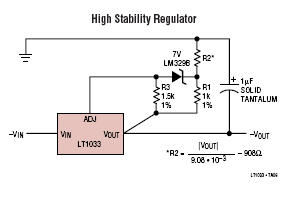
After using them for awhile, I modified them by using an LM329 to bootstrap the internal reference as described in the Linear Technology notes. I didn't make any measurements but that change did make a subtle but audible improvement.
After using them for awhile, I modified them by using an LM329 to bootstrap the internal reference as described in the Linear Technology notes. I didn't make any measurements but that change did make a subtle but audible improvement.

I think many members are using LM317/337 as prefeferred regulator for audio PS. So, I think one goal of this thread should be to publish the best circuit and the design tricks!

You can easily 'mix and match' the adjust resistors and the adjust cap, they are independent variables. You can, as SY noted, use low value resistors for a) low noise and b) additional current draw to get in the even lower noise region. Then just select a cap that gives you the required cut-off freq for lowest lf noise.
IOW, if you keep the 100uF (or even more) you can then play with the resistor values for lowest noise.
Jan Didden
IOW, if you keep the 100uF (or even more) you can then play with the resistor values for lowest noise.
Jan Didden

i was able to measure the output impedance of similar regulators with a very simple set up. All that is required is a function generator and a true rms voltmeter. Check out this post:
http://www.diyaudio.com/forums/showthread.php?postid=1786891#post1786891
be sure to read beyond that post to see how i improved my technique so that i was able to measure very low output impedance.
I also was able to measure the transient response, something you may also be interested in:
http://www.diyaudio.com/forums/showthread.php?postid=1795892#post1795892
You may also want to consider the use of a external voltage reference, as i have done, to get noise even lower.
the thread i provided links to is temporarily dormant but i expect to get it going again in the next couple weeks.
I look forward to seeing what you come up with.
http://www.diyaudio.com/forums/showthread.php?postid=1786891#post1786891
be sure to read beyond that post to see how i improved my technique so that i was able to measure very low output impedance.
I also was able to measure the transient response, something you may also be interested in:
http://www.diyaudio.com/forums/showthread.php?postid=1795892#post1795892
You may also want to consider the use of a external voltage reference, as i have done, to get noise even lower.
the thread i provided links to is temporarily dormant but i expect to get it going again in the next couple weeks.
I look forward to seeing what you come up with.
OK, here are some noise sweeps of the LM337. This first pic shows the extreme cases, top trace 120/1k3 with no cap, bottom trace 950/11k || 100uF. The bottom trace doesn't look too bad, except for the same poorer line freq ripple rejection that we saw with the high value resistors on the LM317. So I think the case is built to avoid the higher value resistor ratios on that basis, even though a little lower noise is possible with them.
The other thing to note is that the noise does not fall off above 3kHz like it does on the LM317. This was into a 1500uF cap on the output! Adding another 1000uF made very little difference.
The other thing to note is that the noise does not fall off above 3kHz like it does on the LM317. This was into a 1500uF cap on the output! Adding another 1000uF made very little difference.
Attachments

This sweep shows the LM337 with optimized values, 120/1k3 || 10uF. So the factory values are right on here. There was little if any benefit to using a larger adjust cap. But interestingly, there was no penalty to it, either - no resonance that developed. So 10uF seems to be the optimum value for the LM337 with the lower value resistor ratios.
Attachments

This one shows the noise spectra of the "optimized" LM317 and LM337 overlayed. They are pretty much equal at around -120dbV up to 2.5kHz, after which the LM317 rolls off significantly, better than 10dB lower at 5kHz. Frankly, I think this high freq noise difference is a sore spot of this regulator pair. Maybe as things progress we'll find a way to deal with it. But, that said, throughout the critical midrange, the noise spectra are pretty equal, so there is some success here.
Attachments

Now here's where the things get even more interesting. I really wanted to measure the output impedance of these critters. I have a network analyser based system that would do it with great accuracy, but it's down for repairs and won't be back up anytime soon. So I decided to use the 3580A tracking generator to put 1VRMS thru a 1000 Ohm resistor then thru a 10,000uF capacitor (to isolate the DC). This creates a current source and the AC voltage at the load is then proportional to the impedance. Since we'll be looking at very low impedance values (below a tenth of an ohm), this method will be accurate to about 0.1% except for the increase caused by the capacitor. But since we're looking for impedance trends and not exact numbers, this is plenty accurate. You can do this with a very sensitive AC voltmeter if you have one, but it's nice seeing it visually.
The pic on the left is the impedance of the "optimized" LM317 and LM337 into 1500uF ||1k2 ohm loads. The impedance range is 0 to 0.2 ohms vertical, DC-5kHz horizontal. And, what do you know, the impedance curves bear a strong resemblance to the noise curves. Who woulda thunk it. 🙂 The 317 impedance bump is centered at 2.4kHz, right where I was hearing it. So I guess my tonal ID skills are doin' OK after all... But the real surprise is that the LM337 is so much better behaved than the 317, with lower and flat output impedance.
Tomorrow I'll go back and re-optimize the 317's RRC values, and the output cap too, and see if that bump can be eliminated. I want to see impedance curves that are smooth with no bumps, and broad, gradual transitions if any. And I want to see the + and - supply be as equal as possible. Right now the negative rail is a better voltage source than the positive.
I then noticed that the LM317 in my test jig is not a Nat Semi part, it is one made by Motorola 9-10 years ago. So just to be sure, I replaced it with a current Nat Semi part, and the impedance sweep of that is in the right photo. It's a better curve for sure, but it still has problems. I'd say stick with the Nat Semi parts if you can.
By the way, the impedance on both of these start rising above say 8-10Khz just like it shows in the manual.
The pic on the left is the impedance of the "optimized" LM317 and LM337 into 1500uF ||1k2 ohm loads. The impedance range is 0 to 0.2 ohms vertical, DC-5kHz horizontal. And, what do you know, the impedance curves bear a strong resemblance to the noise curves. Who woulda thunk it. 🙂 The 317 impedance bump is centered at 2.4kHz, right where I was hearing it. So I guess my tonal ID skills are doin' OK after all... But the real surprise is that the LM337 is so much better behaved than the 317, with lower and flat output impedance.
Tomorrow I'll go back and re-optimize the 317's RRC values, and the output cap too, and see if that bump can be eliminated. I want to see impedance curves that are smooth with no bumps, and broad, gradual transitions if any. And I want to see the + and - supply be as equal as possible. Right now the negative rail is a better voltage source than the positive.
I then noticed that the LM317 in my test jig is not a Nat Semi part, it is one made by Motorola 9-10 years ago. So just to be sure, I replaced it with a current Nat Semi part, and the impedance sweep of that is in the right photo. It's a better curve for sure, but it still has problems. I'd say stick with the Nat Semi parts if you can.
By the way, the impedance on both of these start rising above say 8-10Khz just like it shows in the manual.
Attachments

- Status
- Not open for further replies.
- Home
- Amplifiers
- Power Supplies
- Another look at the LM317 and LM337 regulators