

Why is shunt perceived to be a better topology in terms of noise and regulation performance? Surely hum at the input will be equally attenuated by a series regulator as it uses feedback to maintain the output voltage at a constant level?
I can't understand why a series regulator would have the output corrupted with a triangle wave caused by the feedback, yet this wouldn't happen with a shunt. Or is this corruption just when using ICs?
I am interested in simple discrete implementations mainly, but welcome comments on ICs, too.
I can't understand why a series regulator would have the output corrupted with a triangle wave caused by the feedback, yet this wouldn't happen with a shunt. Or is this corruption just when using ICs?
I am interested in simple discrete implementations mainly, but welcome comments on ICs, too.

Who says so? Normally a series regulator has a "shunt regulator" to create a reference voltage. There are differences between those two types of regulators but there are pros and cons of these types and I think noone is the best.richie00boy said:Why is shunt perceived to be a better topology in terms of noise and regulation performance?
Have you read the gigantic thread about 🤐 Super Regulator which I believe is far better than any shunt regulator.
http://www.diyaudio.com/forums/showthread.php?s=&threadid=20937
If you are looking for a discrete circuit you can check how a LM431 is done but I doubt that you can make it better than the 431.
Richie:
>Why is shunt perceived to be a better topology in terms of noise and regulation performance?<
It isn't, at least if you are looking at the voltage component of the regulator output
>I can't understand why a series regulator would have the output corrupted with a triangle wave caused by the feedback, yet this wouldn't happen with a shunt.<
The use of global feedback is a separate issue from the choice between series and shunt regulation. Feedback can be used in the design of both series and shunt regulators.
>Or is this corruption just when using ICs?<
Certainly the oft-mentioned TL431 IC shunt regulator does not have very good performance for audio applications. An impedance curve that rises steadily above 50kHz until it hits about 13~14 ohms in the 1~5MHz region, noise to spare...
Incidentally, I do feel that shunt regulation has its advantages, but I believe that you may need to look in a somewhat different direction from the questions that you have been asking so far.
A thread with (IMO) more pertinent information can be found here:
http://www.diyaudio.com/forums/showthread.php?postid=135006#post135006
hth, jonathan carr
>Why is shunt perceived to be a better topology in terms of noise and regulation performance?<
It isn't, at least if you are looking at the voltage component of the regulator output
>I can't understand why a series regulator would have the output corrupted with a triangle wave caused by the feedback, yet this wouldn't happen with a shunt.<
The use of global feedback is a separate issue from the choice between series and shunt regulation. Feedback can be used in the design of both series and shunt regulators.
>Or is this corruption just when using ICs?<
Certainly the oft-mentioned TL431 IC shunt regulator does not have very good performance for audio applications. An impedance curve that rises steadily above 50kHz until it hits about 13~14 ohms in the 1~5MHz region, noise to spare...
Incidentally, I do feel that shunt regulation has its advantages, but I believe that you may need to look in a somewhat different direction from the questions that you have been asking so far.
A thread with (IMO) more pertinent information can be found here:
http://www.diyaudio.com/forums/showthread.php?postid=135006#post135006
hth, jonathan carr
Thanks guys, picked up a few things there. I think I will stick with my simple series regulator for now.
Hi all,
I noticed that a series regulator can suffer from the capacitance over it's juctions.. this limmits the high frequency PSRR... still I would prefer series-rugulator with good HF decoupling
just my 2 cts,
Thijs
I noticed that a series regulator can suffer from the capacitance over it's juctions.. this limmits the high frequency PSRR... still I would prefer series-rugulator with good HF decoupling
just my 2 cts,
Thijs
I think a lot of folks have been jumping on the Salas Shunts both the HV and the LV, they are awsome for the right application but the issue is stable absolute voltage. The Salas regs seems better than most Shunts when it comes to varying mains voltage but thermal drift is the issue. The issue with voltage drift is critical when dealing with hybrid tube amps (wrt to the HVSS) and then it crops up again with DAC's with the (LVSS.) Both problems are the same dc-offset. We all know adding a servo just sucks.
I found a company that makes big resistors with very stable ppm and they work great but they are cost prohibited, don't fit the pcbs and don't cater to folks outside industry HR Series-Axial Lead :: Ultra-Precision Resistors: HR, HVA, HVS, RX Series :: Resistors :: Precision Resistor Co., Inc. - Manufacturers of Wire Wound Resistors, Sensors and Shunts. But they do work to give less thermal drift with the SS shunts.
Thats one avenue to dealing with this.
But my question is what designs are out there for big inefficient class A mofset series regulators. I've seen/heard them in commercial designs and they sound great and give stability, but I guess I've never seen a schematic or any DIY discussion.
Anyone have input or threads here where a diyer could start in learning about this ?
Or should we take a step back and consider designing the SS Shunts to work with precision resistors?
I found a company that makes big resistors with very stable ppm and they work great but they are cost prohibited, don't fit the pcbs and don't cater to folks outside industry HR Series-Axial Lead :: Ultra-Precision Resistors: HR, HVA, HVS, RX Series :: Resistors :: Precision Resistor Co., Inc. - Manufacturers of Wire Wound Resistors, Sensors and Shunts. But they do work to give less thermal drift with the SS shunts.
Thats one avenue to dealing with this.
But my question is what designs are out there for big inefficient class A mofset series regulators. I've seen/heard them in commercial designs and they sound great and give stability, but I guess I've never seen a schematic or any DIY discussion.
Anyone have input or threads here where a diyer could start in learning about this ?
Or should we take a step back and consider designing the SS Shunts to work with precision resistors?

Isn't series regulators more sensitive to a varying load than shunts are ?
That's at least a something I've been told (I'm fairly new at this).
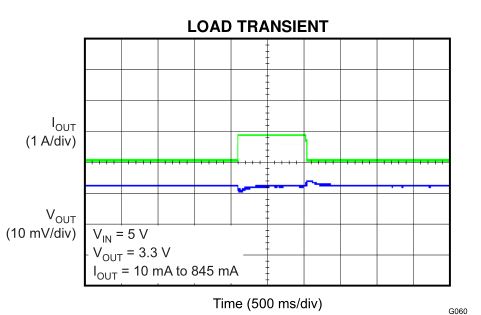
This shows the tps7a4700 going from 10-845mA with a+/-2mV ripple as result.
Is this really something that would occur feeding for instance a dac chip ?
The current draw wouldn't be that high and I would expect it to be more constant.
But if so how about a combination of both types ? To be specific, I'm aiming to try the
tps7a4700 evaluation board feeding "Trident" shunts. I also have a pair of
"Placid" shunts but I'm not shure it's a good idea to place a shunt after another
shunt, especialy since the the tps7a seems to have really nice specs.
I also think that I might have better use for the "Placids" elsewhere so.....
Or maybe the tps7a might even be a better regulator then the "Tridents", I
really don't know and any input would be appreciated.
That's at least a something I've been told (I'm fairly new at this).
This shows the tps7a4700 going from 10-845mA with a+/-2mV ripple as result.
Is this really something that would occur feeding for instance a dac chip ?
The current draw wouldn't be that high and I would expect it to be more constant.
But if so how about a combination of both types ? To be specific, I'm aiming to try the
tps7a4700 evaluation board feeding "Trident" shunts. I also have a pair of
"Placid" shunts but I'm not shure it's a good idea to place a shunt after another
shunt, especialy since the the tps7a seems to have really nice specs.
I also think that I might have better use for the "Placids" elsewhere so.....
Or maybe the tps7a might even be a better regulator then the "Tridents", I
really don't know and any input would be appreciated.
I am far from a power supply expert, but the concept with a "Class A" series regulator isn't an IC, but discrete mofsets biased brute force into class A (or near it) so that the load is insignificant, the problem of course is it means designing from scratch for each application. Its just a pondering, cause the shunt "drift" and resultant DC offset seems to be a common theme with shunt regs I have tried.
Maybe the shunt with precision resistors and oven boxes on the critical active devices are the better option. Just thoughts...
Maybe the shunt with precision resistors and oven boxes on the critical active devices are the better option. Just thoughts...

yes thats why I dont use them more too, even when using zfoil TX220Z resistors (an order of magnitude more impervious to drift than those wirewounds) and large heatsinks for vref; the thermal drift of the active devices is a pita
the whole thing ends up prohibitively large and I agree so many people are just throwing these (very nice) regulators indiscriminately at their builds without a thought for whether they are best for the application.
using LEDs and standard vrefs on a breadboard build the drift is not small.
the whole thing ends up prohibitively large and I agree so many people are just throwing these (very nice) regulators indiscriminately at their builds without a thought for whether they are best for the application.
using LEDs and standard vrefs on a breadboard build the drift is not small.
Last edited:
dahlberg: it depends whether you are talking about powering a digital section, or the analogue or clock sections of a dac, the digital sections can easily have large, rapidly changing transients.
honestly, as i've so often posted around these threads, its the decoupling caps that will handle the transients, there is something wrong with your design if you are expecting the external (and often remote) regulator to do that.
why is this in the Solid State amplifier section?
honestly, as i've so often posted around these threads, its the decoupling caps that will handle the transients, there is something wrong with your design if you are expecting the external (and often remote) regulator to do that.
why is this in the Solid State amplifier section?
dahlberg: it depends whether you are talking about
powering a digital section, or the analogue or clock sections of a dac, the
digital sections can easily have large, rapidly changing transients.
honestly, as i've so often posted around these threads, its the decoupling
caps that will handle the transients, there is something wrong with your
design if you are expecting the external (and often remote) regulator to do that.
why is this in the Solid State amplifier section?
So the need for a shuntregulator would be more relevant in the digital
domain, that's interesting.
When you say that the decoupling caps are responsible for the transient
response you mean quality of components and combination of different types ?
I will be replacing the XR5's for Panasonic SP polymers on the tps7a, after a few
of your comments (and reading up on specs) about them.
If that would make any real difference I don't know yet but it's fun trying 🙂
Yes, it seems to be in the wrong section.
well its not so cut and dried. shunt regs have nice low noise too, a much more relevant attribute for the analogue sections (which includes the clock). no regulator of any type will take care of the transients at these speeds, that is what the caps are there for. the regulators are there to keep the charge up to the caps, the caps have the last word.... visualize the circuit and its really not that hard.
also with many applications the absolute voltage isnt that important because the job at hand doesnt require voltage so close to the rails, nor should it.
I never made any such recommendation, replacing XR5 with polymers would pretty likely be a bad idea; my guess is they are quite local and small in value, in which case it would be better to leave them, or replace with X7R, depends on the circuit.
it seems a very hard point to get across, so many seem to attribute high frequency transient response to something a remote regulator can help with, somehow thinking remote sensing and low output impedance makes all the effects of the distance invisible.... instead of simply making the effects of voltage drop over the resistance caused by the distance invisible
also with many applications the absolute voltage isnt that important because the job at hand doesnt require voltage so close to the rails, nor should it.
I never made any such recommendation, replacing XR5 with polymers would pretty likely be a bad idea; my guess is they are quite local and small in value, in which case it would be better to leave them, or replace with X7R, depends on the circuit.
it seems a very hard point to get across, so many seem to attribute high frequency transient response to something a remote regulator can help with, somehow thinking remote sensing and low output impedance makes all the effects of the distance invisible.... instead of simply making the effects of voltage drop over the resistance caused by the distance invisible
Last edited:
dahlberg: it depends whether you are talking about powering a digital section, or the analogue or clock sections of a dac, the digital sections can easily have large, rapidly changing transients.
honestly, as i've so often posted around these threads, its the decoupling caps that will handle the transients, there is something wrong with your design if you are expecting the external (and often remote) regulator to do that.
why is this in the Solid State amplifier section?
The issues with amps/preamps and dac's are similar enough and I think this is the only "power supply section." Really everything we deal with is an amplifier of some sort.
As far as the decoupling caps handling the transients, my problem may be unique and may not be. But my mains oscillate at a very low subsonic frequency. I calculated it at something like .01 hz, this is tough to filter. And even though it is technically AC, it appears as to DC offset drift as no one filters to such a low frequency. Probably a unique situation to my utility company but I encourage anyone to hook up a multimeter to their wall and record the voltage swing over the course of several minutes.
well its not so cut and dried. shunt regs have nice low noise too, a much more relevant attribute for the analogue sections (which includes the clock). no regulator of any type will take care of the transients at these speeds, that is what the caps are there for. the regulators are there to keep the charge up to the caps, the caps have the last word.... visualize the circuit and its really not that hard.
also with many applications the absolute voltage isnt that important because the job at hand doesnt require voltage so close to the rails, nor should it.
I never made any such recommendation, replacing XR5 with polymers would pretty likely be a bad idea; my guess is they are quite local and small in value, in which case it would be better to leave them, or replace with X7R, depends on the circuit.
it seems a very hard point to get across, so many seem to attribute high frequency transient response to something a remote regulator can help with, somehow thinking remote sensing and low output impedance makes all the effects of the distance invisible.... instead of simply making the effects of voltage drop over the resistance caused by the distance invisible
What numbers of rms noise are we talking about for these shuntregulators? The tps7a is at 4,5uV 10-100khz.
Your'e right that you have made no such recomendation, I just read that you liked the Polymers in general
(use them wherever possible as I rembember it) and that they have very good specs.
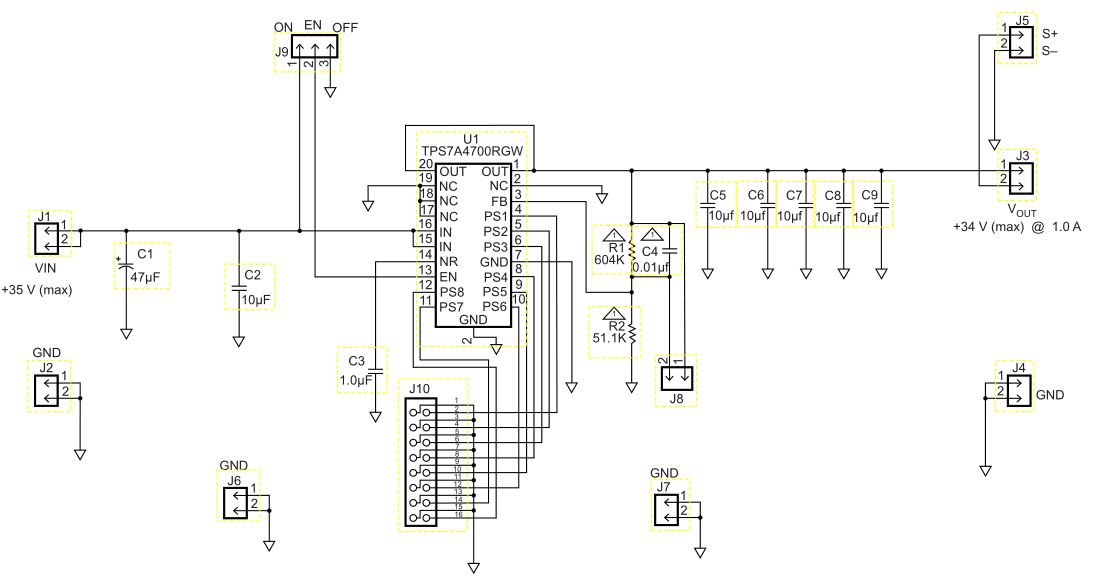
This is the shematics of the circuit, all capasitors are X5R-10% (C1 20%).
I agree, ceramics are excellent as local decoupling. I believe they can't be bettered..................... replacing XR5 with polymers would pretty likely be a bad idea;
Mains frequency changes. Every mains frequency changes...................my problem may be unique and may not be. But my mains oscillate at a very low subsonic frequency. I calculated it at something like .01 hz, this is tough to filter. And even though it is technically AC, it appears as to DC offset drift as no one filters to such a low frequency. Probably a unique situation to my utility company ........
Your situation is not unique. It is NORMAL.
Changing the frequency of the mains by +-x% will not cause DC voltage drift after a properly designed PSU.
Every mains supply changes voltage. This change of +-y% will cause a DC drift in output voltage of a well designed PSU. Read the spec sheet, they will actually give a figure for Vout:Vin variation.

One unique advantage of shunt reg. is that it prevents the circuit being powered from dynamically loading the supply, consequently removing A.C. currents from the ground return paths.
dahlberg:
ahh well if you are speaking of the reg above thats not local decoupling, so it really will depend on your load if you need to replace some, or all of them with polymers. leaving them ceramics will have better transient response at HF, at the cost of lower filtering ability and less storage. replacing with polymers will allow better storage and better filtering.
since afaik you are just driving another regulator with these regs, I really dont know why you are wasting so much time on it 😕
a good shunt reg will be in the nV/Hz range, not µV/Hz, but the same noise performance can be given by discrete series regs also
this is one of those times where the amount of different opinions offered on the forum is a disadvantage to those starting out. These statements on many and varied applications are given or taken generally as sweeping statements. this vast information resource paralyzes those reading and researching, attempting to make ALL the right decisions off the bat, without any application.... that simply cannot ever happen, there will always be changes and even those skilled in the art with many builds under their belt realize that there comes a point you just need to make a start; that is my recommendation for you.
ahh well if you are speaking of the reg above thats not local decoupling, so it really will depend on your load if you need to replace some, or all of them with polymers. leaving them ceramics will have better transient response at HF, at the cost of lower filtering ability and less storage. replacing with polymers will allow better storage and better filtering.
since afaik you are just driving another regulator with these regs, I really dont know why you are wasting so much time on it 😕
a good shunt reg will be in the nV/Hz range, not µV/Hz, but the same noise performance can be given by discrete series regs also
this is one of those times where the amount of different opinions offered on the forum is a disadvantage to those starting out. These statements on many and varied applications are given or taken generally as sweeping statements. this vast information resource paralyzes those reading and researching, attempting to make ALL the right decisions off the bat, without any application.... that simply cannot ever happen, there will always be changes and even those skilled in the art with many builds under their belt realize that there comes a point you just need to make a start; that is my recommendation for you.
Last edited:
Being in solid state amps, I presume that the OP is referring to a regulated PSU to power a power amp.
It's needed to specify whether being a class A or class AB circuit and the required current and tension required. Most shunt designs have limits. See the discussion on the salas shunt and on other versions inspired by it.
Commercial more or less DIY regulators have been used, most often only for the frontend circuits (IPS and VAS), but for a low-power class A amplifier I think that a well dimensioned regulated PSU is also a better option for the output stage.
Whether series or shunt, i really dont know, usually a mix of both is required for best performance.
See for instance the excellent sigma22 that I use in all my headphone amps.
It's needed to specify whether being a class A or class AB circuit and the required current and tension required. Most shunt designs have limits. See the discussion on the salas shunt and on other versions inspired by it.
Commercial more or less DIY regulators have been used, most often only for the frontend circuits (IPS and VAS), but for a low-power class A amplifier I think that a well dimensioned regulated PSU is also a better option for the output stage.
Whether series or shunt, i really dont know, usually a mix of both is required for best performance.
See for instance the excellent sigma22 that I use in all my headphone amps.
dahlberg:
ahh well if you are speaking of the reg above thats not local decoupling, so it really will depend on your load if you need to replace some, or all of them with polymers. leaving them ceramics will have better transient response at HF, at the cost of lower filtering ability and less storage. replacing with polymers will allow better storage and better filtering, but since you are driving another regulator its really not worth spending so much effort on.
since afaik you are just driving another regulator with these regs, I really dont know why you are wasting so much time on it 😕
a good shunt reg will be in the nV/Hz range, not µV/Hz
this is one of those times where the amount of different opinions offered on the forum is a disadvantage. These statements on many and varied applications are given or taken generally as sweeping statements. this vast information resource paralyzes those reading and researching, attempting to make ALL the right decisions off the bat, without any application.... that simply cannot ever happen, there will always be changes and even those skilled in the art with many builds under their belt realize that there comes a point you just need to make a start; that is my recommendation for you.
So if I'm reading this right you are saying that using a shunt closest to the load and
using a series (or another shunt?) regulator as preregulation would be the prefered solution.
I can't say that I have ever read that cheramic capasitors are superior regarding soundquality,
I have read the opposite a few times though. That's why I'm trying Polymers (Panasonic SP's).
Why I'm bothering with the preregulator ?
I'm not aiming for "good enough" in the sense that I think that a 40uf "Duelund vsf cu" is
justified in the passive filter I'm using now, "Obbligato Gold premium" sounded like crap in
comparison, nothing bad actually said about those capasitors they are actually quite good
for there pricerange (Im setting up a dsp xo, for those of you not informed).
I will of cource try different setups, just trying to save a little time sorting out what's preffered first.
- Status
- Not open for further replies.
- Home
- Amplifiers
- Solid State
- Regs - Shunt vs Series