
Again very good work.
I said, I never shout - and why should I stamp (you repeat yourself) ? I will not send you
a paper letter, maybe stomp is better, but english is not my native language. This is only
the second time in my life that somebody calls me rude, maybe because I asked you for
a more decent tone ..
It seems we can not even agree that people have different perception of Zener behaviour
and I am not exactly sure what Georg Simon Ohm and Gustav Kirchhoff had to say
about their properties.
proportion).
I did not mention gas reference tubes (OA150 being only a particular example) and it
has nothing to do with this thread and also not with the useful habit of adding a suitable
capacitor to Zener diodes. In the context here I call this a spurious argument.
OK, stamp and shout. Translations are not always bidirectional, please bear with me,
I have to think in a foreign language. Repeatedly referring to the same contentless
message is also kinda rude.
I said, I never shout - and why should I stamp (you repeat yourself) ? I will not send you
a paper letter, maybe stomp is better, but english is not my native language. This is only
the second time in my life that somebody calls me rude, maybe because I asked you for
a more decent tone ..
It seems we can not even agree that people have different perception of Zener behaviour
and I am not exactly sure what Georg Simon Ohm and Gustav Kirchhoff had to say
about their properties.
This is true.Making the measurements and providing the data does not
put the load on me to chew them thru or to formulate opinions.
Yes, this is why I wrote normalization with respect to their dc voltage output (but not in directPlease do not forget that noise adds up geometrically. The output voltage for 16 LEDs
is 16 times the LED voltage drop. The noise voltage is only 4 times the noise of one
diode.
proportion).
BTW you may encounter funny effects with a OA150 tube and a parallel capacitor, in
that it forms a saw tooth oscillator.
I did not mention gas reference tubes (OA150 being only a particular example) and it
has nothing to do with this thread and also not with the useful habit of adding a suitable
capacitor to Zener diodes. In the context here I call this a spurious argument.

diyBras mentioned the gas tubes. You are not alone here.
And manufacturer and exact part type are given, so you can calculate
the figure of merit of your choice yourself. It is different for every frequency
anyway. The BZX84.... has the voltage even in the part name.
Ohm, Kirchhoff & friends have fixed for good what happens
when you parallel resistors. It is the most basic circuit theory,
as Monte McGuire already noted rightfully.
And manufacturer and exact part type are given, so you can calculate
the figure of merit of your choice yourself. It is different for every frequency
anyway. The BZX84.... has the voltage even in the part name.
Ohm, Kirchhoff & friends have fixed for good what happens
when you parallel resistors. It is the most basic circuit theory,
as Monte McGuire already noted rightfully.
Last edited:
Sorry I did not consider the other single mention of gas reference tubes.
So, if you insist on Ohm, Kirchhoff & friends - what is your preferred model
Ersatzschaltbild of a Zener or Avalanche diode?
So, if you insist on Ohm, Kirchhoff & friends - what is your preferred model
Ersatzschaltbild of a Zener or Avalanche diode?

as_audio,
For incomplete data the discussion are also useless, and discussion are mixed with your findings (decoupling, zener noise and Z), so:
The mentioned circuit has a 1k5 base-to-emitter resistor for a Darlington connection. This amounts for 800µA biasing for the zener. A Darilington will have high current gain so we can consider only a little increment for the 800µA zener bias. For sure less than 1mA. Most measurements show noise rising for low currents. So a bypass here will work wonders, thanks to Kirchhoff relating to high zener dynamic impedance at that point. And the cap will apply full output signal at HF directly at darlington input, raising the local feedback and lowering overall noise. So this circuit arrangement fails to use full zener impedance potential and its low noise zone. Unless you have changed the resistor value for more zener current, but you don't mention this (at least clearly). For scope results at the HV pre example, you mentioned that you are using a simple EF and not a Darlington. Well, this change things. Even if you used 1k5, if you really applied 80mA to the transistor plus diode connection, and have a transistor with beta eg. 80, the base current will results to 1mA approx. plus some 420µA from 1k5 resistor for one Vbe. Less than 1.5mA grand total for zener string. This results some 80-90mW dissipation for the 50-60V zener types mentioned. And add to this fact the series association, elevating the dynamic value more and helping with the bypass efect. For me is a low current for biasing zeners. With 1-2mA zeners will don't have magically low Z. With a very low beta the zener current will be high, then.
Also, here enters a extra topic that perhaps guarantee a new thread: the zener impedance at RF. This is important. Of course will be lower at higher currents. Someone have the information about zener behaviour at RF? If a zener have a high Z at RF like a gas tube, certainly needs some little decoupling cap for not inducing some circuits plugged to it to instabilities. Gerhard mentions about gas tube oscillations with high capacitor value; fortunately for zeners is not such problem.
But don't take this for a criticiscm (English is not my native language); I only feel that all points have to be clarified carefully or we can talking about secondary induced circuits problems and not the effect due to discussed here: the zener noise, at KNOWED biasing. And is not far from topic: is showing a actual application based on trust of zener data.
For incomplete data the discussion are also useless, and discussion are mixed with your findings (decoupling, zener noise and Z), so:
The mentioned circuit has a 1k5 base-to-emitter resistor for a Darlington connection. This amounts for 800µA biasing for the zener. A Darilington will have high current gain so we can consider only a little increment for the 800µA zener bias. For sure less than 1mA. Most measurements show noise rising for low currents. So a bypass here will work wonders, thanks to Kirchhoff relating to high zener dynamic impedance at that point. And the cap will apply full output signal at HF directly at darlington input, raising the local feedback and lowering overall noise. So this circuit arrangement fails to use full zener impedance potential and its low noise zone. Unless you have changed the resistor value for more zener current, but you don't mention this (at least clearly). For scope results at the HV pre example, you mentioned that you are using a simple EF and not a Darlington. Well, this change things. Even if you used 1k5, if you really applied 80mA to the transistor plus diode connection, and have a transistor with beta eg. 80, the base current will results to 1mA approx. plus some 420µA from 1k5 resistor for one Vbe. Less than 1.5mA grand total for zener string. This results some 80-90mW dissipation for the 50-60V zener types mentioned. And add to this fact the series association, elevating the dynamic value more and helping with the bypass efect. For me is a low current for biasing zeners. With 1-2mA zeners will don't have magically low Z. With a very low beta the zener current will be high, then.
Also, here enters a extra topic that perhaps guarantee a new thread: the zener impedance at RF. This is important. Of course will be lower at higher currents. Someone have the information about zener behaviour at RF? If a zener have a high Z at RF like a gas tube, certainly needs some little decoupling cap for not inducing some circuits plugged to it to instabilities. Gerhard mentions about gas tube oscillations with high capacitor value; fortunately for zeners is not such problem.
But don't take this for a criticiscm (English is not my native language); I only feel that all points have to be clarified carefully or we can talking about secondary induced circuits problems and not the effect due to discussed here: the zener noise, at KNOWED biasing. And is not far from topic: is showing a actual application based on trust of zener data.
Last edited:
Thank you for your message.
I did not discuss regulator schemes proposed by others.
My example in the other thread is only used for illustration.
Details of this schematic are probably not of interest.
Your remarks on Zener biasing are justified and I think I know
how to do it. But consider that 80mA constant current does not
mean 80mA in the shunt element as soon as the tubes are warmed
up.
We are not into radio frequencies here, but if you are interested
there is a short article in german "Rauschen von Zenerdioden in
Oszillator Vervielfacherketten" (Noise of Zener Diodes in Oscillator-
Mulitplier Chains) :
Rauschen von Z-Dioden in Oszillator-Vervielfacherketten
Some points in my translation :
- oscillator chain investigated with a spectrum analyser
- bottom line of the plot was noisy
- signal of the oscillator is modulated am and fm by the noise
- modulation is small but can not be permitted in multiplier chains
- the supply, Zener with emitter follower, is in picture 1
- Zener current must be high enough for lower noise
- additional ceramic cap of 2n2, C2 in the picture, improved hf noise by 5dB
- table shows s/n ratio for different currents, diode BZX85/C9V1
- "modern" type BZY85/C9V1 had more noise, but could benefit from C2 addition
- improvement was 30dB in this case.
But again, radio frequencies are outside the scope of DIY Audio and off topic.
I did not discuss regulator schemes proposed by others.
My example in the other thread is only used for illustration.
Details of this schematic are probably not of interest.
Your remarks on Zener biasing are justified and I think I know
how to do it. But consider that 80mA constant current does not
mean 80mA in the shunt element as soon as the tubes are warmed
up.
We are not into radio frequencies here, but if you are interested
there is a short article in german "Rauschen von Zenerdioden in
Oszillator Vervielfacherketten" (Noise of Zener Diodes in Oscillator-
Mulitplier Chains) :
Rauschen von Z-Dioden in Oszillator-Vervielfacherketten
Some points in my translation :
- oscillator chain investigated with a spectrum analyser
- bottom line of the plot was noisy
- signal of the oscillator is modulated am and fm by the noise
- modulation is small but can not be permitted in multiplier chains
- the supply, Zener with emitter follower, is in picture 1
- Zener current must be high enough for lower noise
- additional ceramic cap of 2n2, C2 in the picture, improved hf noise by 5dB
- table shows s/n ratio for different currents, diode BZX85/C9V1
- "modern" type BZY85/C9V1 had more noise, but could benefit from C2 addition
- improvement was 30dB in this case.
But again, radio frequencies are outside the scope of DIY Audio and off topic.

Using the Zener to feed a RC low pass is a step into the right direction, but you cannot ignore the thermal noise of the R that adds to that of the diode, and it easily could be bigger than that of the diode at high frequencies.
regard, Gerhard
Hi Gerhard, why would thermal noise of the R come into play after you RC filter everything? Isn't the noise power just kt/c?
The point is simply: The Z-diode in breakdown has a quite low
source impedance. A BZX84C2V7 may feature 2 nV/rtHz noise.
If you want to improve on that with a capacitor, the capacitance
must be huge to get an interesting corner frequency with the
low differential impedance of the diode. If you put in the numbers:
RC for sub-Ohm and, say 20 Hz. That's a ridiculous return for
a large investment.
With a resistor between the diode and the capacitor you get a
much lower filtering corner. That is good.
But below that corner, it is worse than without filtering since
the series resistor adds noise of it's own. 240 Ohms would
add another 2 nV/rt HZ thermal noise at low frequencies.
(adds geometrically) and it would take some time to reach
the final output voltage.
So you have to decide from your goals and numbers what the
sweet spot is.
source impedance. A BZX84C2V7 may feature 2 nV/rtHz noise.
If you want to improve on that with a capacitor, the capacitance
must be huge to get an interesting corner frequency with the
low differential impedance of the diode. If you put in the numbers:
RC for sub-Ohm and, say 20 Hz. That's a ridiculous return for
a large investment.
With a resistor between the diode and the capacitor you get a
much lower filtering corner. That is good.
But below that corner, it is worse than without filtering since
the series resistor adds noise of it's own. 240 Ohms would
add another 2 nV/rt HZ thermal noise at low frequencies.
(adds geometrically) and it would take some time to reach
the final output voltage.
So you have to decide from your goals and numbers what the
sweet spot is.

Walt Jung directed me to this thread - very nice work from several guys, thanks for the efforts!
One issue I have not see addressed. The use of an RC filter after the reference has been mentioned as a way to decrease reference noise, but that would require heroic capacitor values to be effective at low frequencies.
But there is another good reason to use such an RC filter. I have noticed many times that hf feedthrough from supply output to the reference circuit to the opamp input can cause oscillations in the several to 20MHz range.
Using a reference filter of 100 ohms and 1uF killed those oscillations in each case. A smaller cap value would probably also work, but I have this reel of 2000 1uF SMD NPO I got for free ... ;-)
Jan
One issue I have not see addressed. The use of an RC filter after the reference has been mentioned as a way to decrease reference noise, but that would require heroic capacitor values to be effective at low frequencies.
But there is another good reason to use such an RC filter. I have noticed many times that hf feedthrough from supply output to the reference circuit to the opamp input can cause oscillations in the several to 20MHz range.
Using a reference filter of 100 ohms and 1uF killed those oscillations in each case. A smaller cap value would probably also work, but I have this reel of 2000 1uF SMD NPO I got for free ... ;-)
Jan

You could expect SiC to be noisy as the material purity and crystal flaws is poor compared to pure silicon
Is there anything better than a red led for a cathode biased triode ecc83 at 1mA. I need the grid to be at least -1.5V between 1mA to 1.5mA cathode.
I was goind CCS but then i wondered if the hassle is really woth it ? i want the lowest noise but only passive solutions (no external power).
Thank you.
I was goind CCS but then i wondered if the hassle is really woth it ? i want the lowest noise but only passive solutions (no external power).
Thank you.
@Christer: Thanks to your research I could vastly improve a shunt reg I just build. - You might laugh, but I literally listened to a few Zeners and found that the glass types are much quieter than a ZY12 I also tested. To my ears the difference was about ten-fold. I am not joking, have a look a t the picture.
Cheers
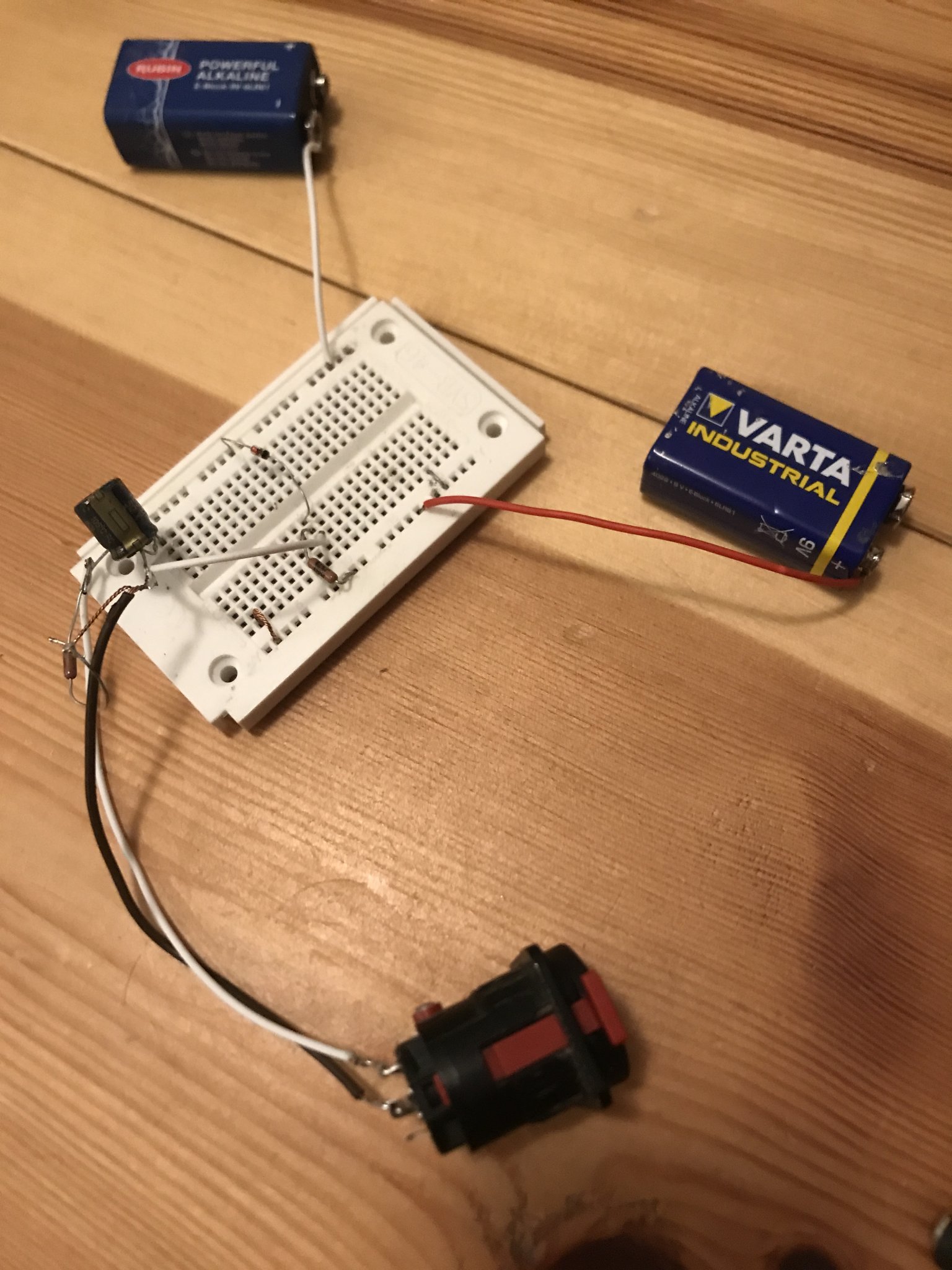 Merten
Cheers


Interesting investigation about JFet, battery, LED, diode and Zener noise :
https://www.mvaudiolabs.com/diy/modern-jfet-noise-measurements/
https://www.mvaudiolabs.com/diy/modern-jfet-noise-measurements/

- Home
- Design & Build
- Parts
- Some noise measurements for LEDs and zener diodes