
I need some help understanding the difference between overshoot and ringing. I read about the two as if they were related so I'll just mention that I understand that overshoot is the tendency of the amplified wave form produced from a square wave to overshoot and then oscillate a bit at the beginning of the square wave. I understand that by experimenting with some silver mica caps bypassing the negative feedback resistor one can eliminate the overshoot.
So assuming that's a relevant starting point, can someone please explain the concept of "ringing" to me?
Thanks
So assuming that's a relevant starting point, can someone please explain the concept of "ringing" to me?
Thanks

Ringing is an oscilation slowing decaying.
Overshoot is a signal passing past where it should stop.
In a class AB amplifier (none quasi) you usually need a capacitor in the VAS to stop overshoot/ringing on the output.
In a class AB (quasi) you also need a capacitor on the lower driver CB to stop overshoot/ringing.
Thats is certainly my experience.
Ringing/overshoot are often found where inductors are being driven like a speaker.
Overshoot is a signal passing past where it should stop.
In a class AB amplifier (none quasi) you usually need a capacitor in the VAS to stop overshoot/ringing on the output.
In a class AB (quasi) you also need a capacitor on the lower driver CB to stop overshoot/ringing.
Thats is certainly my experience.
Ringing/overshoot are often found where inductors are being driven like a speaker.

Both phenomena are caused by an almost resonant response (oscillator with insufficient loop gain to oscillate steadily, but gets fired off by a transient still) from the phase shifted feedback (phase delay from the OT leakge L mainly) . If the resonance is critically damped (loading Z = to omega L = 1/ omega C), then it only overshoots once and settles back to the new state. If under-damped (insufficient loading Zload > omega L...) then it "rings" or oscillates with a decaying amplitude. The overshoot only case simply decays fast enough to avoid another cycle.
The "speedup" capacitor advances the feedback phase enough to eliminate the initial phase shift. No phase shift, no oscillation tendency.
The "speedup" capacitor advances the feedback phase enough to eliminate the initial phase shift. No phase shift, no oscillation tendency.
Last edited:

Overshoot on a square wave or pulse (that's what a square wave really is) refers to the rising (or descending) leading edge where it exceeds the average amplitude. It is indicative of excessive or uncontrolled high frequency response.
Ringing, with reference to the above, is a series of oscillations that follow the initial overshoot. This is usually do to the resonant effects of a coil's inductance.
Ringing, with reference to the above, is a series of oscillations that follow the initial overshoot. This is usually do to the resonant effects of a coil's inductance.
Attachments
Thank you all for the most-helpful responses.
Please allow me a couple of follow up questions.
You say that "If the resonance is critically damped". Can I substitute the word correctly for critically or is there a distinction?
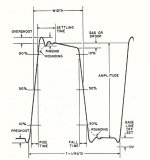
Your explanation covered two cases, the critical and the under-damped. It seems to me that the third case is over damped, and in my experience that causes the phenomenon described in HollowStates drawing as rounding. Have I got that right? If so, what are the sonic effects of these three cases?
I experimented with a little single ended amp I'm building and for the life of me I couldn't discern any difference; granted my bench speakers are not the right tool for that work.
So I take it that overshoot is possible without ringing. I have yet to see that in the flesh. (I can't conceive of ringing without overshoot - I read your explanation to indicate that overshoot is a prerequisite). That would be from excessive high frequency response without the resonant effects of the coil. That leaves me wondering what happens with resonant effects of the coils inductance without the high freq problems. That wouldn't be motor-boating would it?
Lastly, is the addition of a few hundred picofarads of capacitance bypassing the feedback resistor the only tool in our box for correcting overshoot and ringing? It occurs to me that the resistor value could be monkeyed with, but after reading Morgan Jones on the subject I was left with the idea the value is best determined mathematically. Is that a fair statement?
Finally, is that drawing you posted part of a source material available on-line. If so, I'd go for a link.
Nigel, I don't understand the reference to "CB". I'm drawing a blank. The rest I got.
Thanks for the assistance, professors. It's greatly appreciated.
Dave
Please allow me a couple of follow up questions.
If the resonance is critically damped (loading Z = to omega L = 1/ omega C), then it only overshoots once and settles back to the new state. If under-damped (insufficient loading Zload > omega L...) then it "rings" or oscillates with a decaying amplitude. The overshoot only case simply decays fast enough to avoid another cycle.
The "speedup" capacitor advances the feedback phase enough to eliminate the initial phase shift. No phase shift, no oscillation tendency.
You say that "If the resonance is critically damped". Can I substitute the word correctly for critically or is there a distinction?
Your explanation covered two cases, the critical and the under-damped. It seems to me that the third case is over damped, and in my experience that causes the phenomenon described in HollowStates drawing as rounding. Have I got that right? If so, what are the sonic effects of these three cases?
I experimented with a little single ended amp I'm building and for the life of me I couldn't discern any difference; granted my bench speakers are not the right tool for that work.
Overshoot on a square wave or pulse (that's what a square wave really is) refers to the rising (or descending) leading edge where it exceeds the average amplitude. It is indicative of excessive or uncontrolled high frequency response.
Ringing, with reference to the above, is a series of oscillations that follow the initial overshoot. This is usually due to the resonant effects of a coil's inductance.
So I take it that overshoot is possible without ringing. I have yet to see that in the flesh. (I can't conceive of ringing without overshoot - I read your explanation to indicate that overshoot is a prerequisite). That would be from excessive high frequency response without the resonant effects of the coil. That leaves me wondering what happens with resonant effects of the coils inductance without the high freq problems. That wouldn't be motor-boating would it?
Lastly, is the addition of a few hundred picofarads of capacitance bypassing the feedback resistor the only tool in our box for correcting overshoot and ringing? It occurs to me that the resistor value could be monkeyed with, but after reading Morgan Jones on the subject I was left with the idea the value is best determined mathematically. Is that a fair statement?
Finally, is that drawing you posted part of a source material available on-line. If so, I'd go for a link.
In a class AB (quasi) you also need a capacitor on the lower driver CB to stop overshoot/ringing.
Nigel, I don't understand the reference to "CB". I'm drawing a blank. The rest I got.
Thanks for the assistance, professors. It's greatly appreciated.
Dave
Last edited:
"Critically damped" is a technical term with a precise meaning. Whether this is the correct damping depends on the situation, and what you are trying to achieve.
Motor-boating is low frequency oscillation. It is the LF equivalent of HF oscillation, and is usually caused by different circuit elements (apart from the OPT which tends to figure in stability issues at both ends of the spectrum).
Motor-boating is low frequency oscillation. It is the LF equivalent of HF oscillation, and is usually caused by different circuit elements (apart from the OPT which tends to figure in stability issues at both ends of the spectrum).

Dave - all your questions are answered by a (online) filter calculator.
Have a look at the step response and you are there.
There simply is no way of being "correct" - its all a question of bandwidth and filter type involved.
step response plots tell you what you get.
Sadly - no one will be able to tell you what sounds best (besides avoid excessive overshot/ringing) - and this is true for *any* part of audio design where filter slopes appear (and there are many many many - down to the PSU and even the power grid behaviour at current demand)
Michael
Have a look at the step response and you are there.
There simply is no way of being "correct" - its all a question of bandwidth and filter type involved.
step response plots tell you what you get.
Sadly - no one will be able to tell you what sounds best (besides avoid excessive overshot/ringing) - and this is true for *any* part of audio design where filter slopes appear (and there are many many many - down to the PSU and even the power grid behaviour at current demand)
Michael
Last edited:
Yes, overshoot is very possible without ringing in any case where there is no inductance involved, or virtually none. A simple example would be the compensation of an oscilloscope 10X probe. The probe is connected to a 1KHz square wave and the compensating capacitor adjusted for a sharp square leading corner without rounding or overshoot.So I take it that overshoot is possible without ringing. I have yet to see that in the flesh. (I can't conceive of ringing without overshoot - I read your explanation to indicate that overshoot is a prerequisite).
Lastly, is the addition of a few hundred picofarads of capacitance bypassing the feedback resistor the only tool in our box for correcting overshoot and ringing?
Finally, is that drawing you posted part of a source material available on-line.
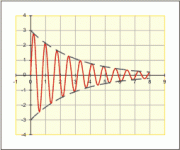
Technically speaking, overshoot is not a prerequisite for ringing, although it may sometimes be there. Outside of audio amplifiers, ringing can be a useful thing. Sound effects, frequency calibration and transformer testing to name a few. From my TV servicing days, ringing high voltage transformers was a good test of the winding's integrity. Loosely coupling a sawtooth waveform to the scope vertical input along with the winding in parallel produced a damped ringing waveform something like the one shown below if it was good.
Overshoot and/or ringing from the OPT can sometimes be helped with a small amount of C across the primary.
The picture I posted was to depict some common pulse terminology. I scanned it from Tremaine's Audio Cyclopedia. But any good text on pulse technogoly would have it.
Attachments

Yes, overshoot is very possible without ringing in any case where there is no inductance involved, or virtually none. A simple example would be the compensation of an oscilloscope 10X probe. The probe is connected to a 1KHz square wave and the compensating capacitor adjusted for a sharp square leading corner without rounding or overshoot.
Compensating a probe is a completely different task.
Its the task of *removing* a bandwidth limiting slope by making a divider resistive only.
Certainly the only "perfect" filter is no filter at all.
Again - either play with a filter simulation tool or read a book about filter theory to get a feeling regarding step response and overshot / ringing. The basics are pretty simple - but complexity of details easily sky rock with higher order
Michael
Compensating a test probe is simply an easy to see example of overshoot without ringing. Nothing more. Long haired explanations can do more to confuse then help. I try to keep things simple.Compensating a probe is a completely different task.
I have yet to see that in the flesh.
If it happens that you do not believe in books nor simulations - what about buying some resistors, coils and caps and see what you get in measuring time and frequency behaviour ?
Report back *if* you come across something groundbreaking - but be aware that this entire topic has been well researched and is well understood in each and every detail for generations now.
Compensating a test probe is simply an easy to see example of overshoot without ringing. Nothing more. Long haired explanations can do more to confuse then help. I try to keep things simple.
As said - if you omit a filter you omit overshot and ringing as well - this by no means is the same as looking at overshot and ringing of filters.
Doing compensation of complex divider to get it purely resistive (by balancing the complex part) and thus frequency independent is just that : omitting a bandwidth limiting filter slope.
Michael

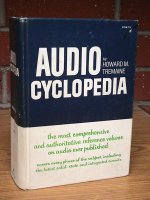
I thought that diagram looked familiar! Several years ago, my wife found me a copy of that same book in a dumpster near her workplace. It's the 1969 edition, and I noted on the back that it cost $39.95 when new. According to the Bureau of Labor Statistics' inflation calculator, that would be equivalent to $237.37 today.The picture I posted was to depict some common pulse terminology. I scanned it from Tremaine's Audio Cyclopedia.
Thanks for all for the help. There is a good technical book store near by and I'll have a look for Tremaine. (I do believe in books; I've seen them and touched them and even hid things in them). I'll also look for that on-line filter calculator.
Thanks HollowState for that diagram, I now can conceive of ringing without overshoot.
Thanks HollowState for that diagram, I now can conceive of ringing without overshoot.
Mr. Z,
You have a great book. I bought mine new when the 2nd edition first came out in 1969. Don't think I paid that much, more like $19.95. (I think) Found a 2nd copy years later at a flea market cheap. Every audio person should have one in their library. There's far more practical "audio" information in it then that (big red) Radiotron Designers Handbook everybody raves about.
Captn Dave,
Audio Cyclopedia is long out of print so you'll have to find a used copy. There's one on eBay now, and the last one sold for $51. You want the big blue 2nd edition. (white & blue dust cover)
You have a great book. I bought mine new when the 2nd edition first came out in 1969. Don't think I paid that much, more like $19.95. (I think) Found a 2nd copy years later at a flea market cheap. Every audio person should have one in their library. There's far more practical "audio" information in it then that (big red) Radiotron Designers Handbook everybody raves about.
Captn Dave,
Audio Cyclopedia is long out of print so you'll have to find a used copy. There's one on eBay now, and the last one sold for $51. You want the big blue 2nd edition. (white & blue dust cover)
Attachments
Long haired explanations can do more to confuse then help. I try to keep things simple.
The main difference between "long hairy" guys and "skin heads" may be found in that first group tries to manover trough problems in live by using their mind first off - whereas the latter group prefers to use a peacemaker first.

As those peacemaker solutions are quite final, first group is in serious trouble whenever getting into conflict with second group. Thats probably the main cause why first group is (and ever was) that little ?
Please - take my remark rather as a general observation - of course not specifically applying to anybody present.
Michael
Last edited:
He's talking about transistors.Nigel, I don't understand the reference to "CB". I'm drawing a blank. The rest I got.
Someone forgot where he was for a minute there.
I couldn't agree more! The really nice thing is the way it's written; even a techno-goober like me can understand the majority of what's written.You have a great book. I bought mine new when the 2nd edition first came out in 1969. Don't think I paid that much, more like $19.95. (I think) Found a 2nd copy years later at a flea market cheap. Every audio person should have one in their library. There's far more practical "audio" information in it then that (big red) Radiotron Designers Handbook everybody raves about.
I often consult it before asking "stoopud" questions (or making unfounded assertions) on this forum, as I have yet to find an audio-related topic that hasn't been covered at least tangentially.I guess the RDH definitely has its place as a good all 'round vacuum tube guide, although most of its information is lost on me since I'm not a circuit designer (in fact, the only copy that I "own" is one I downloaded off of Pete Millett's site). As far as actually building circuits goes, I've gotten much more mileage from books like older copies of the Radio Amateur's Handbook. But I figure this one is the mother lode for those of us who futz about with tubes for audio...
Nigel, I don't understand the reference to "CB". I'm drawing a blank. The rest I got.
Thanks for the assistance, professors. It's greatly appreciated.
Dave
CB is collector base of the lower driver.
Hi There
get some live here.
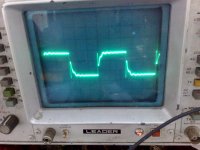
I have also ringing and overshoot, but I see that as wel in the grounding as pulses 400mv pp if I go 20 volts output in 8 ohms wirewound resistor, what did I wrong, I have a supplys earths as a star to the center of the biggest supply, I use 2x 55 volts, 2x 120 volts (tube driver) and one 300 volts (tube voltage preamp).
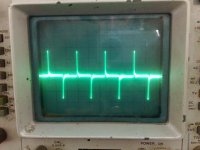
photo 2 is a square wave trough 100k pot to srpp 6h8c it I set it full open the output of the signal generator distorts like on picture there is feedback trough earth I think, normally a tube is high input impedance and miller, the signal generator has a output amp of 5 watts so it is capable to drive.
how to earth this properly, I did see that if I play with a earth wire things change, so there is a earth problem, this amp is in testfase with a poor mans pcb as start so things can give problems.
there is here next door a powerfull wifi antenna who bundels rf power to 15 km away possible this thing gives problems because I see so now and then pulsing signal on output, even on the supplys.
But the sound, it is open and sweet I do like it.
thanks.
get some live here.
I have also ringing and overshoot, but I see that as wel in the grounding as pulses 400mv pp if I go 20 volts output in 8 ohms wirewound resistor, what did I wrong, I have a supplys earths as a star to the center of the biggest supply, I use 2x 55 volts, 2x 120 volts (tube driver) and one 300 volts (tube voltage preamp).
photo 2 is a square wave trough 100k pot to srpp 6h8c it I set it full open the output of the signal generator distorts like on picture there is feedback trough earth I think, normally a tube is high input impedance and miller, the signal generator has a output amp of 5 watts so it is capable to drive.
how to earth this properly, I did see that if I play with a earth wire things change, so there is a earth problem, this amp is in testfase with a poor mans pcb as start so things can give problems.
there is here next door a powerfull wifi antenna who bundels rf power to 15 km away possible this thing gives problems because I see so now and then pulsing signal on output, even on the supplys.
But the sound, it is open and sweet I do like it.
thanks.
Attachments
Last edited:
- Status
- This old topic is closed. If you want to reopen this topic, contact a moderator using the "Report Post" button.
- Home
- Amplifiers
- Tubes / Valves
- Overshoot and Ringing