

I left CES pondering a couple of things:
1) Dipoles sound really nice, particularly Vanderstien
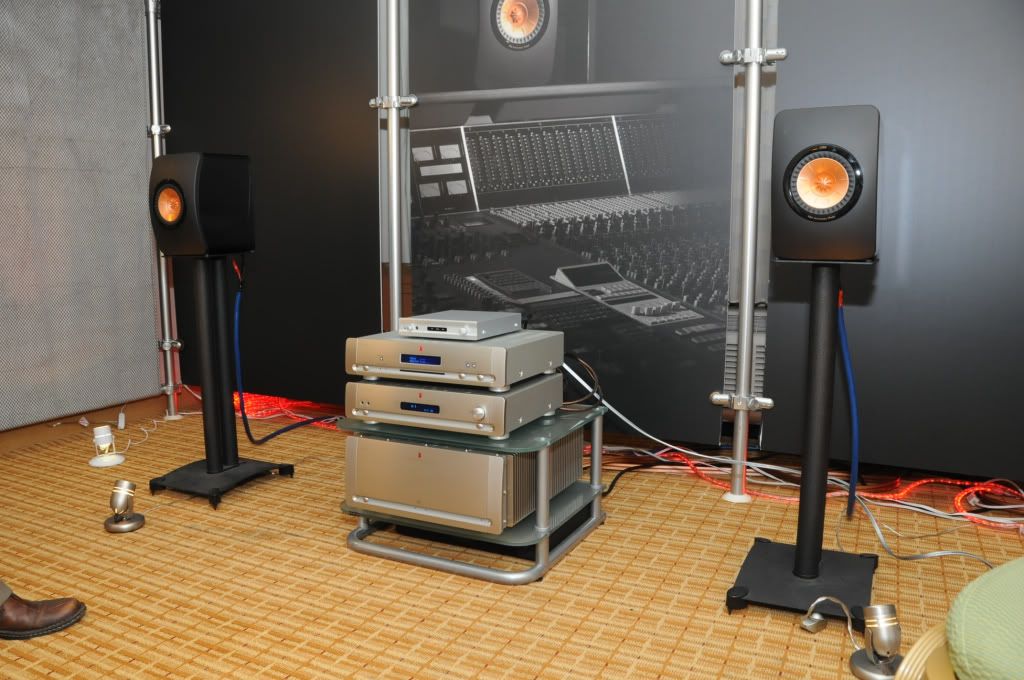
2) Coaxes solve a lot of problems - the Kef LS50 was probably the best 'bang for the buck' that I heard at the whole show
3) tweeters in horns can't hold a candle to tweeters in waveguides
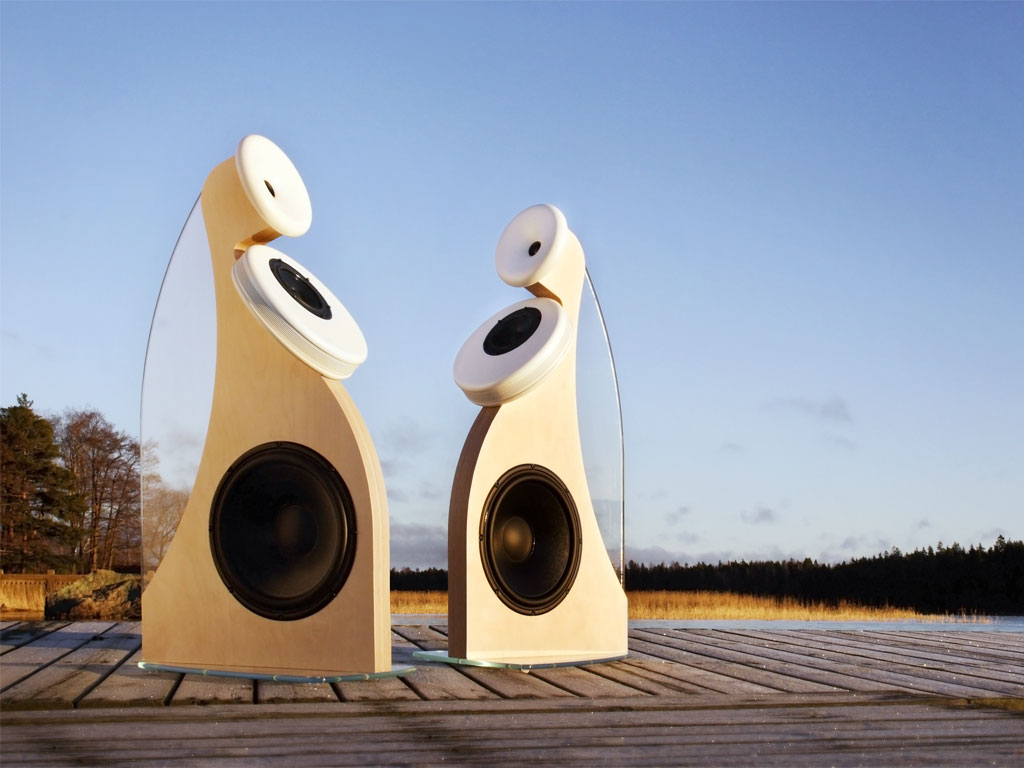
An obscure speaker from a manufacturer in Finland combined some of the best attributes of all these solutions, and I was surprised by how good it sounded. Particularly since it's a brand that seems often ignored.
I'm a bit curious if anyone else has evaluated them, particularly if they've heard John K, Linkwitz, or Vanderstien dipoles.
Besides sounding good, I was a bit surprised by how good the directivity is. With such a strangely arrayed set of drivers, I would expect to see ugly gaps and discontinuities in the polar response, but it's quite good!
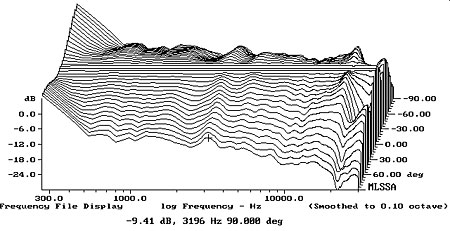
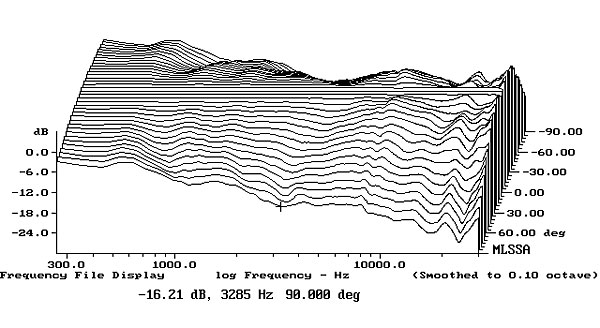
Here's a couple of John Atkinson's measurements. The first is from the Gradient Helsinki, the second is from the Kef LS50 (which is also very good IMHO.)
1) Dipoles sound really nice, particularly Vanderstien
2) Coaxes solve a lot of problems - the Kef LS50 was probably the best 'bang for the buck' that I heard at the whole show
3) tweeters in horns can't hold a candle to tweeters in waveguides
An obscure speaker from a manufacturer in Finland combined some of the best attributes of all these solutions, and I was surprised by how good it sounded. Particularly since it's a brand that seems often ignored.
I'm a bit curious if anyone else has evaluated them, particularly if they've heard John K, Linkwitz, or Vanderstien dipoles.
Besides sounding good, I was a bit surprised by how good the directivity is. With such a strangely arrayed set of drivers, I would expect to see ugly gaps and discontinuities in the polar response, but it's quite good!
Here's a couple of John Atkinson's measurements. The first is from the Gradient Helsinki, the second is from the Kef LS50 (which is also very good IMHO.)

2) Coaxes solve a lot of problems - the Kef LS50 was probably the best 'bang for the buck' that I heard at the whole show
I have been a fan and a user of UniQs since the beginning of my audiophile journey
With such a strangely arrayed set of drivers,
take a closer look - it is not that strange, just strange-looking
in fact Gradient used coaxials in some of their designs
apparently they eventually came to think that it is better to use in Helsinki a separate dedicated waveguide than to count on the inherent directivity of a coaxial?
or they couldn't find a suitable coaxial? or they opted for strange looks for marketing reasons?
hard to say
Here's a couple of John Atkinson's measurements. The first is from the Gradient Helsinki, the second is from the Kef LS50 (which is also very good IMHO.)
I believe that the waveguided tweeter and the midbass in cardioid enclosure could be replaced by an LS50 UniQ unit in a cardioid enclosure without any significant difference in the end - ie. sonic - results
Last edited:

Jorma Salmi is a guy who likes to do unconventional designs. He has also published various AES-papers on radiation pattern and room acoustics.
I haven't heard Helsinki if I remember right, but they set some conditions to the room to sound right. I can't forget the sound created by Gradient 1.3
Home
I haven't heard Helsinki if I remember right, but they set some conditions to the room to sound right. I can't forget the sound created by Gradient 1.3
Home
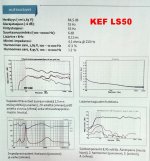
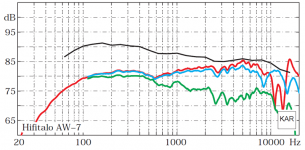
Kef LS50 was measered for a Finnish magazine. The power response was calculated from anechoid chamber measurements. Not the best I have seen. For comparison same measurement from a SEAS coaxial application
Attachments
Last edited:
I believe that the waveguided tweeter and the midbass in cardioid enclosure could be replaced by an LS50 UniQ unit in a cardioid enclosure without any significant difference in the end - ie. sonic - results
The cardioid has somewhat narrower directivity at 500 Hz and is probably more immune to the front wall. But in my experience a cardioid makes the biggest sonic difference compared to a closed box if it is used down to about 100 Hz, which they did not do unfortunately.

thanks Patrick, that's a refreshing thread! 
some history..
Innerworld Audio - Early days of Gradient
some history..
Innerworld Audio - Early days of Gradient
thanks Patrick, that's a refreshing thread!
some history..
Innerworld Audio - Early days of Gradient
those line arrayed coaxials...
An externally hosted image should be here but it was not working when we last tested it.

so much for driver spacing etc. considerations
crazy Finns!
The cardioid has somewhat narrower directivity at 500 Hz and is probably more immune to the front wall.
yes, you're most probably right as LS50 UniQ unit is quite small
perhaps that's why Helsinki use a separate waveguided tweeter?
because there is no coaxial big enough to meet this requirement of higher directivity - and also the requirement of power and Vd (necessary to cross at 200 Hz to a big dipole woofer) - on the market of raw drivers, apart from perhaps some Tannoy custom installations units
Here is my hypothesis on why the Gradient Helsinki sounds so good.
This is just a hypothesis, and I welcome opinions on why/how it works.
First off, picture a typical bookshelf speaker. In the midrange, we are going to have 'ghosts' of the original signal which are re-radiated by a series of diffractions:
1) There is diffraction off of the left, right, top, and bottom of the front of the enclosure
2) midrange wavelengths are long - between 34 and 68 centimeters - and these wavelengths will 'wrap around' the cabinet, diffracting off the back edges, though to a lesser degree than the front
In addition to cabinet diffraction, we are also going to get reflections off of the back wall, the floor, and the ceiling.
I personally believe that diffraction is more offensive than reflections however. Diffraction happens early, and IMHO the time domain is very important. Basically you can't eliminate reflections and diffraction, but the closer they are to the original impulse, the more they collapse the soundstage and reduce intellgibility. Our brains are adept at isolating the primary source of a sound; it's the reason we can listen to someone speak in a crowded reflective room, and hear what they're saying while filtering out the background noise.
In a nutshell, early diffraction and reflections are bad imho; late reflections are less offensive and can even be psychoacoustically beneficial.
One way to reduce diffraction is to use a spherical enclousre. And this works very well. Just check out my thread on spherical enclosures here* for lots of testimonials.
But it opens up another can of worms - which is harmonic distortion. Basically as you reduce the size of the radiator, efficiency and output is reduced, so you have to increase power to the driver, which generally increases distortion.
Again, spherical enclosures image beautifully, but they're not the best option for dynamics imho.
One solution to the distortion problem is to use lots of drivers!
For instance, the array above uses a line of radiators to increase efficiency and output, which also reduces harmonic distortion.
Ah, now we've created a new problem. We have asymmetric directivity and comb filtering. Basically the array works like a tall narrow radiator. So the horizontal directivity is going to be wide, while the vertical directivity is going to be narrow.
Instead of using array, one might consider an elliptical driver. Basically the ideal driver would play 20hz to 20khz, and it would be be infinitely small. But that's an impossible goal - you're not going to get bass out of a 1" tweeter. But even an elliptical driver won't work, as it basically radiates like an array of drivers with the same dimensions.
The midrange in the Gradient Helsinki is an interesting solution to the problem. By tilting the midrange backwards, we get the displacement of a 5" woofer, with an enclosure that has an acoustic 'signature' that's about the size of a 2" driver. Basically when we're listening to a loudspeaker we don't just here the sound of the speaker in the box; we also hear the sound that's re-radiated via diffraction off of the cabinet. One can reduce the diffraction by using a spherical enclosure*. But that reduces maximum output and dynamics. But simply tilting the enclosure gives us the full output of the driver, but with a 'footprint' that is much smaller. In addition to having a smaller 'acoustic footprint', we also get some other advantages:

The flat baffle of 'conventional' loudspeakers acts like a waveguide. It constrains the output to 180 degrees. But this creates four strong reflections. A reflection off of the floor, the ceiling, the left wall, and the right wall.
We can't escape these reflections, unless our radiator was infinitely small.
But the Gradient does something clever, it basically distributes those reflections all over the listening room. So we still get four reflections, but they're not parallel to each other. More importantly, they're distributed in the time domain. So the 'floor bounce' doesn't occur at the same time as the 'ceiling bounce' or the bounce off of the wall.
Basically it goes back to my original hypothesis; that reflections are inescapable, but late reflections are less offensive than early reflections.
The Gradient Helsinki basically reflects the energy off of the floor and ceiling and walls, just as any loudspeaker does. But it does it later, and when it does it, the reflections are distributed in time to a greater degree than a conventional loudspeaker with a flat baffle.
This is just a hypothesis, and I welcome opinions on why/how it works.
An externally hosted image should be here but it was not working when we last tested it.

First off, picture a typical bookshelf speaker. In the midrange, we are going to have 'ghosts' of the original signal which are re-radiated by a series of diffractions:
1) There is diffraction off of the left, right, top, and bottom of the front of the enclosure
2) midrange wavelengths are long - between 34 and 68 centimeters - and these wavelengths will 'wrap around' the cabinet, diffracting off the back edges, though to a lesser degree than the front
In addition to cabinet diffraction, we are also going to get reflections off of the back wall, the floor, and the ceiling.
I personally believe that diffraction is more offensive than reflections however. Diffraction happens early, and IMHO the time domain is very important. Basically you can't eliminate reflections and diffraction, but the closer they are to the original impulse, the more they collapse the soundstage and reduce intellgibility. Our brains are adept at isolating the primary source of a sound; it's the reason we can listen to someone speak in a crowded reflective room, and hear what they're saying while filtering out the background noise.
In a nutshell, early diffraction and reflections are bad imho; late reflections are less offensive and can even be psychoacoustically beneficial.
An externally hosted image should be here but it was not working when we last tested it.

One way to reduce diffraction is to use a spherical enclousre. And this works very well. Just check out my thread on spherical enclosures here* for lots of testimonials.
But it opens up another can of worms - which is harmonic distortion. Basically as you reduce the size of the radiator, efficiency and output is reduced, so you have to increase power to the driver, which generally increases distortion.
Again, spherical enclosures image beautifully, but they're not the best option for dynamics imho.
An externally hosted image should be here but it was not working when we last tested it.

One solution to the distortion problem is to use lots of drivers!
For instance, the array above uses a line of radiators to increase efficiency and output, which also reduces harmonic distortion.
Ah, now we've created a new problem. We have asymmetric directivity and comb filtering. Basically the array works like a tall narrow radiator. So the horizontal directivity is going to be wide, while the vertical directivity is going to be narrow.
An externally hosted image should be here but it was not working when we last tested it.

Instead of using array, one might consider an elliptical driver. Basically the ideal driver would play 20hz to 20khz, and it would be be infinitely small. But that's an impossible goal - you're not going to get bass out of a 1" tweeter. But even an elliptical driver won't work, as it basically radiates like an array of drivers with the same dimensions.
An externally hosted image should be here but it was not working when we last tested it.

The midrange in the Gradient Helsinki is an interesting solution to the problem. By tilting the midrange backwards, we get the displacement of a 5" woofer, with an enclosure that has an acoustic 'signature' that's about the size of a 2" driver. Basically when we're listening to a loudspeaker we don't just here the sound of the speaker in the box; we also hear the sound that's re-radiated via diffraction off of the cabinet. One can reduce the diffraction by using a spherical enclosure*. But that reduces maximum output and dynamics. But simply tilting the enclosure gives us the full output of the driver, but with a 'footprint' that is much smaller. In addition to having a smaller 'acoustic footprint', we also get some other advantages:
The flat baffle of 'conventional' loudspeakers acts like a waveguide. It constrains the output to 180 degrees. But this creates four strong reflections. A reflection off of the floor, the ceiling, the left wall, and the right wall.
We can't escape these reflections, unless our radiator was infinitely small.
But the Gradient does something clever, it basically distributes those reflections all over the listening room. So we still get four reflections, but they're not parallel to each other. More importantly, they're distributed in the time domain. So the 'floor bounce' doesn't occur at the same time as the 'ceiling bounce' or the bounce off of the wall.
Basically it goes back to my original hypothesis; that reflections are inescapable, but late reflections are less offensive than early reflections.
The Gradient Helsinki basically reflects the energy off of the floor and ceiling and walls, just as any loudspeaker does. But it does it later, and when it does it, the reflections are distributed in time to a greater degree than a conventional loudspeaker with a flat baffle.
1)
In a nutshell, early diffraction and reflections are bad imho; late reflections are less offensive and can even be psychoacoustically beneficial.
But the Gradient does something clever, it basically distributes those reflections all over the listening room. So we still get four reflections, but they're not parallel to each other. More importantly, they're distributed in the time domain. So the 'floor bounce' doesn't occur at the same time as the 'ceiling bounce' or the bounce off of the wall.
Basically it goes back to my original hypothesis; that reflections are inescapable, but late reflections are less offensive than early reflections.
Amen and Hallelujah!

But the Gradient does something clever, it basically distributes those reflections all over the listening room. So we still get four reflections, but they're not parallel to each other. More importantly, they're distributed in the time domain. So the 'floor bounce' doesn't occur at the same time as the 'ceiling bounce' or the bounce off of the wall.
You're describing a behavior that is common to most loudspeakers. It's not unique to the Gradient. Tilting a speaker (or driver) simply sends more energy in the room which decreases D/R ratio.
But the Gradient does something clever, it basically distributes those reflections all over the listening room.
not really all over
in fact this scheme of pattern of reflections is misleading
please consider the directivity of the 6 inches midbas unit in this cardioid configuration and of the waveguided tweeter
for me it is quite evident that Helsinki deliberately uses (and increases the level of) the ceiling reflection and avoids (decreases the level of) the floor reflection to get the sound right
sometime ago in another thread someone called such a loudspeaker a ceiling flooder in an analogy to a "flood lamp" used for: "Indirect lighting, or uplighting, [which] create
in the case of Helsinki there is much less energy reflected off the floor towards the listener and much more energy reflected off the ceiling towards the listener in comparison with a conventional loudspeaker
Tilting a speaker (or driver) simply sends more energy in the room which decreases D/R ratio.
less? why?
not less - but in a different way, the pattern of the reflected sound is different

An externally hosted image should be here but it was not working when we last tested it.
403 Access Denied

403 Access Denied
why bawling?
it's just a typical bookshelf
An externally hosted image should be here but it was not working when we last tested it.

Here is my hypothesis
.
.
Basically you can't eliminate reflections and diffraction, but the closer they are to the original impulse, the more they collapse the soundstage and reduce intellgibility.
On the other side, due to finite time-frequency resolution of the perception system the closer they are to the original impulse, the more they emerge as an inseparable entity.
The perception of cabinet diffraction depends on the time difference in relation to wavelength. This would indicate the diffraction effects be worse at highest freqs, but there also the time-freq resolution is poor (in terms of [dT]/[dHz]). For this reason for example high freq comb filtering goes mostly unnoticed.
- Elias
You're describing a behavior that is common to most loudspeakers. It's not unique to the Gradient. Tilting a speaker (or driver) simply sends more energy in the room which decreases D/R ratio.
Agreed, yes. Nothing magical about the Gradient, just saying that it's midrange configuration is a clever way of making the midrange act like a radiator that's a smaller size. The 'look' of the speaker reminds of some DIY experiment, but the measurements indicate that there's real engineering and a process of continued refinement in the design.

Member
Joined 2003
it's midrange configuration is a clever way of making the midrange act like a radiator that's a smaller size.
I'd think it's the other way around. If it's a working cardioid then the directivity at the lower end is higher than the same driver in a similar sized box.
- Status
- This old topic is closed. If you want to reopen this topic, contact a moderator using the "Report Post" button.
- Home
- Loudspeakers
- Multi-Way
- Who Likes Gradient?