
Hello, 
I'm planning to attenuate the tweeters in my speakers.
With my new amp, the upper midgrange and the top end can be a little bit on the cold side on some recordings.
I was planning to use metal oxide resistors, but I got some advices that I could try carbon film instead.
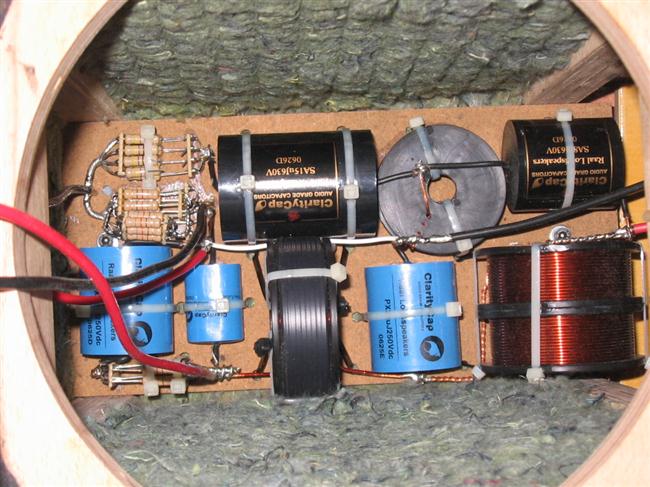
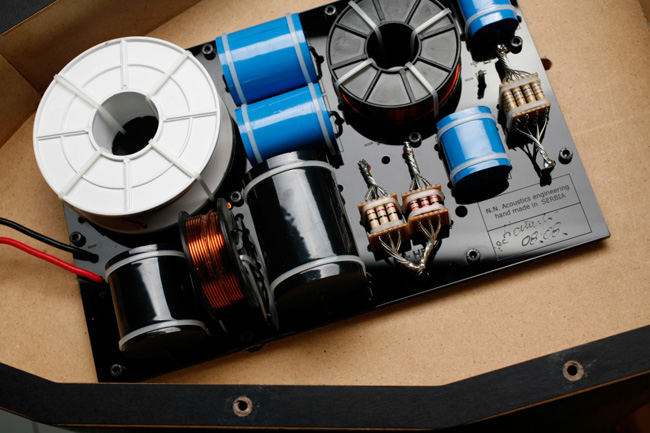
It turned out that some manufacturers are using bunches of 10 or more carbon film resistors connected in parallel:
Upon further reading, I found claims that metal oxide resistors are technically "better" and more precise, but that they can be cold sounding.
Carbon films are technically inferior, but they are warmer, more musical, etc:
Carbon Film vs Metal Film revisited
So guys, do you have some/any experiences with carbon film resistors in speaker crossovers?!
In my country, the choice of high quality components is very limited.
These are the carbon film resistors that I can buy at this moment:
Cinetech Ind. Co., Ltd
http://www.cinetech.com.tw/upload/2011/03/20110330164634.pdf
What do you think?
Thanks in advance,
Aleksandar
I'm planning to attenuate the tweeters in my speakers.
With my new amp, the upper midgrange and the top end can be a little bit on the cold side on some recordings.
I was planning to use metal oxide resistors, but I got some advices that I could try carbon film instead.
It turned out that some manufacturers are using bunches of 10 or more carbon film resistors connected in parallel:
Upon further reading, I found claims that metal oxide resistors are technically "better" and more precise, but that they can be cold sounding.
Carbon films are technically inferior, but they are warmer, more musical, etc:
Carbon Film vs Metal Film revisited
So guys, do you have some/any experiences with carbon film resistors in speaker crossovers?!
In my country, the choice of high quality components is very limited.
These are the carbon film resistors that I can buy at this moment:
Cinetech Ind. Co., Ltd
http://www.cinetech.com.tw/upload/2011/03/20110330164634.pdf
What do you think?
Thanks in advance,
Aleksandar
Metal film, metal oxide and carbon film are three different things. Over simplifying things, metal film is probably the most precise and highly regarded. Metal oxide is often used for power and high temperature resistors. I've found it can have a voltage coefficient at higher voltages. Not much, but they're not as good as metal films. The tempco is probably higher. Carbon films are the cheapest of the cheap. They can perform well, but all properties are inferior. They are sometimes used as fuses to protect circuitry since they burn up easily. I use wire wound resistors for crossovers. There's nothing wrong with paralleling a bunch of metal films either. I only use metal oxide in power supply duty and carbon film for nothing at all. I don't subscribe to the different sounds of resistors unless maybe when used in a feedback network where the characteristics of the resistors are transferred directly to the amplifier, or in certain critical locations in tube circuits.
Last edited:

Having a bundle of resistors together might make getting the exact value you need a little easier, but I'd be willing to bet there isn't anyone who could tell the difference between these and a typical good wirewound resistor in an A/B test.
Edit: for the lulz.
http://www.engadget.com/2008/03/03/audiophiles-cant-tell-the-difference-between-monster-cable-and/
Edit: for the lulz.
http://www.engadget.com/2008/03/03/audiophiles-cant-tell-the-difference-between-monster-cable-and/
Last edited:

... but I'd be willing to bet there isn't anyone who could tell the difference ...[/url]
I guarantee that different types of resistors, with similar inductance and capacitance, will sound exactly the same. I don't see how it is possible for a difference to be heard.
Post up a theory or some measurements, not placebo anecdotes.
More myths, legends and voodoo ... just like cables. Don't spread the hype.
Nonsense.I guarantee that different types of resistors, with similar inductance and capacitance, will sound exactly the same. I don't see how it is possible for a difference to be heard.
Post up a theory or some measurements, not placebo anecdotes.
More myths, legends and voodoo ... just like cables. Don't spread the hype.
Why bother telling others they can not hear it when they think they can.
And if you think it is nonsense is OK to me. You use what you think is best. Just do not try to say its voodoo when you can not prove it can't be detected by a trained listener.
ABC testing is no use because a dutch mathematicus calculated you have to do about 176 trails to say for sure the results are accurate. When you think you can do so much trails with test persons then you could prove something.
Last edited:
0Why bother telling others they can not hear it when they think they can.
It's called the truth and getting an education.
Imagine going to school and the instructors reinforcing every misconception you had with their rational being because you believe it true.
ABC testing is no use because a dutch mathematicus calculated you have to do about 176 trails to say for sure the results are accurate. When you think you can do so much trails with test persons then you could prove something.
That claim of 176 trials makes no sense. The point you are trying to make has to do with statistical relevance. However, not every study is the same.
For instance, how many iterations would be necessary to be statistically relevant to determine if the sun was shinning or if it was night?
The statistical relevance of any study depends on a number of factors as well as the ability to resolve or discriminate the changes you are trying to measure.
There is no way that 176 is a magic number in the game of statistical studies.
Lastly, I don't know who initially claimed what here, but whoever makes a claim is the one that must demonstrate proof.
However, my claim is that resistors do not make an audible difference in a passive crossover, so I offer this link as my substantiation.
Passive Crossover Network Design
If you read through the link you will realize there are a number of factors involved, but of all components in a crossover, resistors are the least of ones worries.
That claim of 176 trials makes no sense. The point you are trying to make has to do with statistical relevance. However, not every study is the same.
Even if it takes 176 people to determine if I'm really hearing a difference, those 176 people aren't the ones that have to enjoy my audio system
While I don't typically subscribe to some of the snake oil ideas like rubber balls under your amplifier, or using wire in one direction rather than the other, I am willing to accept that some people do things we find strange in order to enhance their enjoyment. I don't have to listen to their stuff and they don't have to listen to mine, so it's really irrelevant.
The claim one can not hear the difference is nonsense because I already hear a difference. Like I stated why bother when you can not prove a thing here.
No filter driver application is the same so to generalize and say that your the one who got the knowledge on your site is do I not see of any worth.
Every thing you say can be turned around 180 degrees, you have to come with prove here.
There are no ideal wires resistors and capacitors. Thats why things sound different.
No filter driver application is the same so to generalize and say that your the one who got the knowledge on your site is do I not see of any worth.
Every thing you say can be turned around 180 degrees, you have to come with prove here.
There are no ideal wires resistors and capacitors. Thats why things sound different.
Even if it takes 176 people to determine if I'm really hearing a difference, those 176 people aren't the ones that have to enjoy my audio system
While I don't typically subscribe to some of the snake oil ideas like rubber balls under your amplifier, or using wire in one direction rather than the other, I am willing to accept that some people do things we find strange in order to enhance their enjoyment. I don't have to listen to their stuff and they don't have to listen to mine, so it's really irrelevant.
But the original poster specifically asked if there was an audible difference between MF and CF resistors.
If he solicits an opinion it is more useful to render an educated opinion that has something to back it up rather than simply saying use what sounds better to you or render an uneducated opinion.
The claim one can not hear the difference is nonsense because I already hear a difference.
Okay, show me your data that supports your claim.
I listed mine.
I guess what I am saying is that there is no empirical evidence to suggest that one resistor type is better than another as far as audibility is concerned.
If you have a study that suggests otherwise I would be interested in reading it, but everything I have read does not support that there is a difference.
If you also believe that you need 176 trials as a minimum to make a claim, then surely your own single experience is not significant to support that claim. Would you agree?
No one will ever hear a difference between different resistor types used in this manor. Instead, worry about things that actually make a difference ... and better yet, work on something that makes a significant difference.
If you don't want to be formally educated, then find a difference that will stand out in an ABX test. Now find out how to measure it to get a better understanding of what it is, and how it works. Don't listen to voodoo.
If you don't want to be formally educated, then find a difference that will stand out in an ABX test. Now find out how to measure it to get a better understanding of what it is, and how it works. Don't listen to voodoo.
I don't know if parallel resistors make a difference or not, but the fact that some manufacterers go to the trouble of fitting them makes me think it would be worth trying.
Right, and it is worth using parallel resistors for power handling / heat dissipation. No doubt about it. No argument here, that's another topic entirely.

 guys please don't let this degenerate into an objective vs subjective free for all.
 mod hat off now, I wouldn't like to put any absolutes here, surely differences between inductive and non-inductive resistors used in a crossover could come into play? The inductance of various resistors is something that is not often stated in the datasheets I have seen, unless they are highlighting that they are low inductance. Who's to say that the differences one person hears between resistor A and resistor B is not due to differences in construction (leading to differences in inductance) as opposed to the material that the resistor is made out of? Secondly, did anyone who said that they could hear a difference, state that the specifications of the two different resistors were identical?
Tony.

I think I sometimes notice a very small difference between carbons and others. I'm not prepared to prove it. I remember reading once about the resistance of a carbon resistor changing along with the voltage across it. Naturally, such a characteristic would produce distortion. I would imagine second order at least in amps, and third order at least with speakers. I'd simply encourage anyone interested to try it for themselves. Naturally, tweeter resistors are popular. Older carbon composition resistors seem to be the best candidates but modern carbon films as well.
I did test with ceramic capacitors they hat much less capacity when used at maximum rated voltage.I think I sometimes notice a very small difference between carbons and others. I'm not prepared to prove it. I remember reading once about the resistance of a carbon resistor changing along with the voltage across it. Naturally, such a characteristic would produce distortion. I would imagine second order at least in amps, and third order at least with speakers. I'd simply encourage anyone interested to try it for themselves. Naturally, tweeter resistors are popular. Older carbon composition resistors seem to be the best candidates but modern carbon films as well.
It is also in the spec. but you have to think about it. Never hear some thing like that about carbon resistors I know they ad more noise and have lower power rating than metal film resistors in the same shape.
To parallel low inductive metal film comes more close to the ideal resistor. What is bad by using a almost ideal resistor? when you want resistance not inductance.
- Status
- This old topic is closed. If you want to reopen this topic, contact a moderator using the "Report Post" button.
- Home
- Loudspeakers
- Multi-Way
- Carbon film resistors in crossovers