
It would be trivial to calculate the motion of a pendulum if displacement is assumed small and if an infinitely rigid rod is assumed to connect the boundary and the mass.
Satisfying the first assumption is easy. All we have to do is maximize the mass ratio. However, we cannot easily satisfy the second assumption. In fact, it would probably be better if we used something similar to a frictionless string.
#1 Aesthetics aside, what would you consider to be the ideal material that approaches the behavior of a "frictionless" string?
#2 I assume the string will have resonances (I think this is why StigErik chose to use rubber for his material). How would you calculate this? The boundary condition does not equal zero. Would that make it an inhomogeneous differential equation?
#3 How would the equations change if a 3D swing (ie you might visualize it as a tripod that is inverted and whose rods are replaced by strings) compared to a swing with a single string?
#4 What would you consider to be the minimum mass ratio? It would appear that the displacement of the pendulum would have a negligible effect on the response of the loudspeaker, UNLESS its displacement approached the dimensions of the highest reproduced wavelength. Would you consider 1/(highest reproduced wavelength*10) to be a good rule of thumb for maximum allowable displacement of the pendulum?
Thanks,
Thadman
Satisfying the first assumption is easy. All we have to do is maximize the mass ratio. However, we cannot easily satisfy the second assumption. In fact, it would probably be better if we used something similar to a frictionless string.
#1 Aesthetics aside, what would you consider to be the ideal material that approaches the behavior of a "frictionless" string?
#2 I assume the string will have resonances (I think this is why StigErik chose to use rubber for his material). How would you calculate this? The boundary condition does not equal zero. Would that make it an inhomogeneous differential equation?
#3 How would the equations change if a 3D swing (ie you might visualize it as a tripod that is inverted and whose rods are replaced by strings) compared to a swing with a single string?
#4 What would you consider to be the minimum mass ratio? It would appear that the displacement of the pendulum would have a negligible effect on the response of the loudspeaker, UNLESS its displacement approached the dimensions of the highest reproduced wavelength. Would you consider 1/(highest reproduced wavelength*10) to be a good rule of thumb for maximum allowable displacement of the pendulum?
Thanks,
Thadman
Last edited:

- Nobendium is an alloy of unobtanium---the alloying process isn't hard, just finding the unobtainium that's tricky. 😛 For real materials, probably nanotubes. They're hard to make long enough and hard to work with for speakers though, so I think you wind up with tensile structures with most any light cord being a good aproximation.
- Modes should be the same as for any tensioned string. Stig Erik switched to rubber from chain, I believe because the links were clinking a bit. To my knowledge it's an open question as to whether having more or less viscoelastic damping in the strings is desirable, but since more damping means lower resonant Q and hence broader peaks the tradeoffs are likely ones of moving issues out of a driver's passband where possible versus suppressing them where not.
- The point of swinging is to isolate the driver. All triangular structures I'm thinking of fail to do this for either push or pull on the driver's cone/membrane, so I'm not sure it's an interesting problem to solve. A more interesting case is probably that of an inverted pendulum as turning the pendulum upsidedown obviates the need for a frame to hang the drivers from, thereby opening up some elegant (at least to me) possibilities for industrial design.
- Personally I'd want less than 36 degrees of phase shift. The practical limitation is not the reaction forces from the driver but floor vibration and air currents from people walking around, furnaces, and so on. Some damping is needed in the pendulum/pantograph to keep this under control; in my case it's provided by the zip cord running to the drivers.
B isn't a simple pendulum as the lengths aren't equal. Probably close enough from a pendulum standpoint, though. In practice it can be bitchy to work with as the center of mass in many drivers is essentially the magnet's center of mass, leaving little load on the basket lines and making it hard to keep the driver stable.So, A, B, C are all good, D is not.
Why?
Multiple magnitudes of difference exist between the mass of a loudspeaker moving system and that of the structure which surrounds and supports it. In this setting the issues raised here regarding the suspension are of little consequence because the associated movements will be barley detectable and certainly inaudible. Also, if two drivers are mounted back to back, all forces of concern here would be entirely cancelled when the drivers are fed identical (in phase) signals. The main concern when hanging loudspeakers from a ceiling is the safety of the audience passing below them. The use of wire or string for this purpose is thus contraindicated, strong cables or brackets are preferred.
Regards,
WHG
It would be trivial to calculate the motion of a pendulum if displacement is assumed small and if an infinitely rigid rod is assumed to connect the boundary and the mass.
Satisfying the first assumption is easy. All we have to do is maximize the mass ratio. However, we cannot easily satisfy the second assumption. In fact, it would probably be better if we used something similar to a frictionless string.
#1 Aesthetics aside, what would you consider to be the ideal material that approaches the behavior of a "frictionless" string?
#2 I assume the string will have resonances (I think this is why StigErik chose to use rubber for his material). How would you calculate this? The boundary condition does not equal zero. Would that make it an inhomogeneous differential equation?
#3 How would the equations change if a 3D swing (ie you might visualize it as a tripod that is inverted and whose rods are replaced by strings) compared to a swing with a single string?
#4 What would you consider to be the minimum mass ratio? It would appear that the displacement of the pendulum would have a negligible effect on the response of the loudspeaker, UNLESS its displacement approached the dimensions of the highest reproduced wavelength. Would you consider 1/(highest reproduced wavelength*10) to be a good rule of thumb for maximum allowable displacement of the pendulum?
Thanks,
Thadman
Multiple magnitudes of difference exist between the mass of a loudspeaker moving system and that of the structure which surrounds and supports it. In this setting the issues raised here regarding the suspension are of little consequence because the associated movements will be barley detectable and certainly inaudible. Also, if two drivers are mounted back to back, all forces of concern here would be entirely cancelled when the drivers are fed identical (in phase) signals. The main concern when hanging loudspeakers from a ceiling is the safety of the audience passing below them. The use of wire or string for this purpose is thus contraindicated, strong cables or brackets are preferred.
Regards,
WHG
Last edited:

On string:
1/8 inch (3mm) diameter rope is readily available with a tensile strength of 2600 pounds! But it costs over $1.25 per foot.
1/8 inch (3mm) diameter rope is readily available with a tensile strength of 2600 pounds! But it costs over $1.25 per foot.
I think the biggest problem faced by these driver suspended by a "thin" wire (string, rope, chain, cable ..... whatever) designs is that you have now turned the driver into a two degree of freedom system with the suspension wires being the path to ground. The driver cone and voice coil is mass one, the surround is spring one, the driver frame is mass two, and the suspension wires to ground are spring two. The first mode will be the cone and frame moving together stretching both of the springs, the second mode will be the cone moving forward the frame will moving backward (I can't believe that is a good result). One mode will be below and one above fs. A massive stiff baffle rigidly coupled to the driver frame and the floor forces the driver to act as a single degree of freedom system as intended.
I saw this when testing my 18" Goldwood H frame design. I had the speaker sitting on my garage floor and was measuring the voice coil electrical impedance. So the small signal oscillating cone was being reacted by the driver frame attached to the plywood H frame, seemed like a simple test at first. I was surprised to get two impedance peaks that bracketed the driver's fs. When I added mass to the H frame, I sat on it, I measured the impedance again and got only one peak as expected at the driver fs. In the first test the second mode of the H frame system was the driver cone moving one way and the H frame moving the opposite way (similar to subs that march across the floor).
Think about the physics, if you suspend the driver by wires it will be a lumped mass suspended by wires. It will behave like a stretched string with a mass in the middle and have a resonant frequency. The higher the tension the higher the frequency, just like a violin string. This is why I am not a proponent of nude drivers hung by tension links or of magnet mounting a driver. The ultimate method for making the vibrating cone the only vibrating source of sound is by coupling a strong driver frame to a relatively rigid and massive open baffle.
Martin
I saw this when testing my 18" Goldwood H frame design. I had the speaker sitting on my garage floor and was measuring the voice coil electrical impedance. So the small signal oscillating cone was being reacted by the driver frame attached to the plywood H frame, seemed like a simple test at first. I was surprised to get two impedance peaks that bracketed the driver's fs. When I added mass to the H frame, I sat on it, I measured the impedance again and got only one peak as expected at the driver fs. In the first test the second mode of the H frame system was the driver cone moving one way and the H frame moving the opposite way (similar to subs that march across the floor).
Think about the physics, if you suspend the driver by wires it will be a lumped mass suspended by wires. It will behave like a stretched string with a mass in the middle and have a resonant frequency. The higher the tension the higher the frequency, just like a violin string. This is why I am not a proponent of nude drivers hung by tension links or of magnet mounting a driver. The ultimate method for making the vibrating cone the only vibrating source of sound is by coupling a strong driver frame to a relatively rigid and massive open baffle.
Martin
Umm, to the extent there's any springiness in the lines (not much) the forces in a typical hang are normal to it (to an excellent approximation). So I'm not finding a way to apply the above analysis; I'm not aware of any cases where the driver ends up bouncing up and down. 😕
I do agree infinite mass is one option in the design continuum but there's a fair bit of objective and subjective data to indicate swung or magnet mounted drivers are often better than baffle mounting---the measurements I've done are no exception. Martin, did you measure any decoupling techniques in addition to looking at the high mass end of the design continuum? Stig Erik's approach of sitting the H baffle on an inflated bicycle inner tube is an easy one to try. Also, what happened with SPL, phase, and linearity of the output sound with the second peak?
I do agree infinite mass is one option in the design continuum but there's a fair bit of objective and subjective data to indicate swung or magnet mounted drivers are often better than baffle mounting---the measurements I've done are no exception. Martin, did you measure any decoupling techniques in addition to looking at the high mass end of the design continuum? Stig Erik's approach of sitting the H baffle on an inflated bicycle inner tube is an easy one to try. Also, what happened with SPL, phase, and linearity of the output sound with the second peak?
Thank you for the "heads-up". What will certainly be audible is the absence or presence of a baffle. The assertion that mechanics of an assemblage "swing" is audible is subject to question.
Regards,
WHG
Yeah. I agree with Martin that having the basket and magnet move in reaction to the cone isn't ideal. But with most drivers having cone:rest of driver mass ratios of 1:100 or more the reaction motion's minimal. Basket structures more or less have to have lower Sd and higher dipole peaks than the cone, but that's not the case for the magnet or spider---generally, the smaller the driver the larger and more efficient the magnet and spider are relative to the cone. However, for the woofers I've looked at the mass ratio tends to increase, offsetting that somewhat. So, in rough numbers, the SPL of the opposing wave from the basket and magnet is at most 45 or 50dB down from the wave off the cone. To the extent the phase shift induced by time of flight is small, this is a negligible reduction in SPL. For the commonly chosen six inch midwoofers the phase shift's around 45 degrees at the dipole peak which could, in principle, produce distortion terms around -50dB. That's below the ambient noise floor of most measurements so it's tough to pin down---I've poked around a bit with my eight inches and not been able to spot any issues.
As to the pendulum lines themselves, their Sd is small, dipole peak high, and resonant Q usually low. So getting them to voice like instrument strings is tough; I've not hit problems with that either.
The point passive crossovers can suffer from impedance matching problems from mechanical coupling is interesting. I switched to active years ago so it's not something I've ever looked at. I would surmise, however, that reducing coupled mass by getting rid of the baffle works to mitigate the problem much like adding mass does. And there's a considerable evidence lowering the suspension resonance and Q also works.
As to the pendulum lines themselves, their Sd is small, dipole peak high, and resonant Q usually low. So getting them to voice like instrument strings is tough; I've not hit problems with that either.
The point passive crossovers can suffer from impedance matching problems from mechanical coupling is interesting. I switched to active years ago so it's not something I've ever looked at. I would surmise, however, that reducing coupled mass by getting rid of the baffle works to mitigate the problem much like adding mass does. And there's a considerable evidence lowering the suspension resonance and Q also works.

Yeah. I agree with Martin that having the basket and magnet move in reaction to the cone isn't ideal. .
The point possibly is that what matters more is that the driver moves "in a strongly predictable way" with swings, whereas this is never the case (gradually) with any other form of "non-local mass" support - meaning - there is no phase shift nor any delays involved (ideally).
YouTube - Resonantie
Michael
Agree on the desirability of avoiding more complex vibrational modes by using mounting methods which decouple the driver. There are mounting methods besides regular pendulums which should also accomplish that---inverted pendulums and thrust bearings are a couple of the more interesting ones---but regular pendulums' simplicity and ease of construction is hard to beat.
Inverted pendulum is interesting.
The sub-chassis arrangements of the Linn Sondek player could be seen as an example. They used conical springs though - which were terminated / dampened by pieces of rubber.
The main issue here is exactly what is seen in the Linn arrangement: you will have - in one way or another - a mass of same small amount that will compromise the "100% local mass impulse compensation" and on top of that will have a multitude of additional resonances in those springs you have to deal with.
But on the other hand, even a tiny string of a pendulum will do the same - to some minor extent.
Using bearings *should* work too, but isn't very practically IMO - possibly better to go for Stig Erik's solution with tubes (and always keep a repair kit at hand 😉 )
Michael
The sub-chassis arrangements of the Linn Sondek player could be seen as an example. They used conical springs though - which were terminated / dampened by pieces of rubber.
The main issue here is exactly what is seen in the Linn arrangement: you will have - in one way or another - a mass of same small amount that will compromise the "100% local mass impulse compensation" and on top of that will have a multitude of additional resonances in those springs you have to deal with.
But on the other hand, even a tiny string of a pendulum will do the same - to some minor extent.
Using bearings *should* work too, but isn't very practically IMO - possibly better to go for Stig Erik's solution with tubes (and always keep a repair kit at hand 😉 )
Michael
Plenty of ways to build inverted pendulums besides springs, tubes certainly being one of them. Flexural modes in wood pieces around 10 to 20mm in OD should work well with drivers of moderate weight and I'd expect the same from small bar stock in most metals. There's also an entire category of tensile structures where light and stiff structures are held in place by various forms of guy wires, so one can fabricate an inverted pendulum from a stiff rod with any number of spring like devices to provide a restoring force to hold the rod vertical.
Thrust bearings are a horizontal variation of this latter category of pendulums and shouldn't be particularly hard to work with. A certain amount of precision's needed in their alignment and managing torque from the driver but cabinetry work for box speakers is more exacting. Main issue is probably cost; I suspect some creativity around air suspensions---a generalization of the bicycle tube category---may yield better results. So far I haven't come up with any ideas I particularly like for heavy drivers, however. I'm mainly interested in thrust bearings and their alternatives for 15s and 18s where the need for a low suspension resonant frequency and close distance to the floor makes inverted pendulums harder to work with.
Thrust bearings are a horizontal variation of this latter category of pendulums and shouldn't be particularly hard to work with. A certain amount of precision's needed in their alignment and managing torque from the driver but cabinetry work for box speakers is more exacting. Main issue is probably cost; I suspect some creativity around air suspensions---a generalization of the bicycle tube category---may yield better results. So far I haven't come up with any ideas I particularly like for heavy drivers, however. I'm mainly interested in thrust bearings and their alternatives for 15s and 18s where the need for a low suspension resonant frequency and close distance to the floor makes inverted pendulums harder to work with.

Party Spoofer
Technical people respond to questions in three ways: It is technically impossible (meaning: I don't feel like doing it); It depends (meaning: abandon all hope of a useful answer); The data bits are flexed through a collectimizer which strips the flow-gate arrays into virtual message elements (meaning: I don't know).
Dilbert
Very interesting this may help YouTube - True marvel of engineering..
Technical people respond to questions in three ways: It is technically impossible (meaning: I don't feel like doing it); It depends (meaning: abandon all hope of a useful answer); The data bits are flexed through a collectimizer which strips the flow-gate arrays into virtual message elements (meaning: I don't know).
Dilbert
Technical people respond to questions in three ways: It is technically impossible (meaning: I don't feel like doing it); It depends (meaning: abandon all hope of a useful answer); The data bits are flexed through a collectimizer which strips the flow-gate arrays into virtual message elements (meaning: I don't know).
Dilbert
😀
I've poked around a bit with my eight inches and not been able to spot any issues.
OT 😀


Thanks for that, simply GREAT !
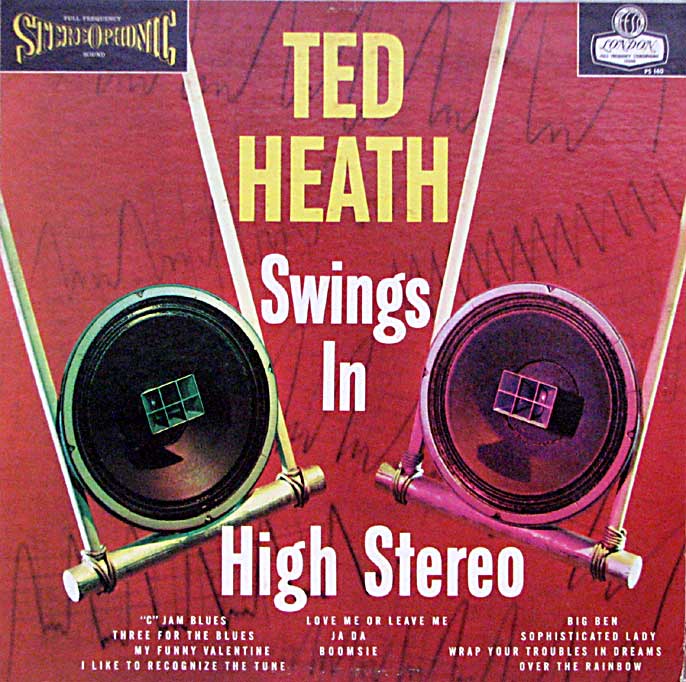
Swinging speakers? Nothing new. 😉
(Yes, I actually own this album)
- Status
- Not open for further replies.
- Home
- Loudspeakers
- Multi-Way
- Physics of Swinging speakers