

Isophthalic polyester resin and bentonite Plinth
Andy,
Look back a few pages (91), my posts start here:
http://www.diyaudio.com/forums/analogue-source/190735-sp-10-mkii-next-project-10.html#post3188192
I used Isophthalic polyester resin and bentonite (cat litter).
Rush
Thanks Rush,
I'll have to read through this a few times before I fully grasp all that it entails. From my first read however it appears getting my hands on a sheet of panzerholz would be a good bet. Not easy to obtain however though there is a supplier in eastern Canada.
As this will be my first attempt I am thinking building the perfect plinth initially may not be necessary. Woodsong Audio in Idaho builds a wonderful product in Panzerholz at what seems a very reasonable price considering the workmanship. After experimenting with my own, I may end up going that way, if only for the aesthetics.
What did you end up doing?
Andy
Andy,
Look back a few pages (91), my posts start here:
http://www.diyaudio.com/forums/analogue-source/190735-sp-10-mkii-next-project-10.html#post3188192
I used Isophthalic polyester resin and bentonite (cat litter).
Rush

Thanks so much for that information Steve - really helpful. Great pictures too! Wondering whether I should leave the bearing where it is, or push it out now. Pushing it out might lightly score the sides of the ball bearing?
Did you find a flat spot or evidence of wear on the ball bearing from where the spindle had rested upon it all these years? I imagine the 'plastic' (Teflon?) button at the bottom of the spindle is designed to be softer than the ball bearing though. If there was no flat spot or mark on yours, I guess there'd be no point in removing mine.
John.
Answering my own post - how sad

Ball bearing came out with a piece of bamboo (the end sanded down to avoid any sharp edges) placed into the bearing, and a very light couple knocks with a hammer. Some black gunk at the bottom. Old oil that a standard clean with cotton buds obviously hadn't removed. So for a perfectly clean bearing housing a full strip down is essential really. No flat spots or obvious marks that I can see on the ball bearing - whew!
Will clean and re-oil using SAE 20 'blue' 3-in-1, which apparently is the very same stuff that Technics use in their decks.
Was wondering how the plastic 'button' on the bottom of the spindle is attached. Another interference fit? If I had the tools/means would love to get a few replacements made from different materials...
John

Ball bearing came out with a piece of bamboo (the end sanded down to avoid any sharp edges) placed into the bearing, and a very light couple knocks with a hammer. Some black gunk at the bottom. Old oil that a standard clean with cotton buds obviously hadn't removed. So for a perfectly clean bearing housing a full strip down is essential really. No flat spots or obvious marks that I can see on the ball bearing - whew!
Will clean and re-oil using SAE 20 'blue' 3-in-1, which apparently is the very same stuff that Technics use in their decks.
Was wondering how the plastic 'button' on the bottom of the spindle is attached. Another interference fit? If I had the tools/means would love to get a few replacements made from different materials...
John
Glad that worked out John.
re: The plastic "pad" at the thrust end of the spindle shaft. What it is and how it is fitted within the shaft is still unknown to me. But I intend to find out and when I do will post some more photos.
Of course if anyone who already knows about this part, I'd sure appreciate some advance info.
-Steve
Last edited:
And now I'm doing a substantial re-design with a few improvements because of unscrupulous copycats.
John
Albert Porter's version of a SP10 mkII/III plinth have been something of an inspiration for me. Although I do not intend to end up with a shape that mimics those of yours and Albert's vision.
From the photos I've seen, the Porterhouse plinths are superb and unique. You have my respect.
Although I plan on using a "bearing sink" as has been shown in the Porterhouse plinths. And I will use gray iron as the material of choice for its high graphite content and dampening ability. But the rest of it I hope to be unique to my own vision.
Another thing to consider:
The SP10 designs are the property of Matsushita. Their design. Their vision. From long ago. For my money, that is where the credit really goes. So trying to make a buck by producing "accessory products" for this old design seems in and of itself a bit like the Ramora clinging to the shark.
Me. As a diy project this can be something to gain experience and a certain amount of pleasure/reward from. Reworking a 35 yr old turntable. It is fun. But I won't get protective about my work until I come up with my own turntable design. And I"m not there as yet. So that is why I'm willing to share my drawings and designs and projects over the web. Because, ultimately, the credit still goes to the owner of the original turntable design.
my2c
-Steve
Glad that worked out John.
re: The plastic "pad" at the thrust end of the spindle shaft. What it is and how it is fitted within the shaft is still unknown to me. But I intend to find out and when I do will post some more photos.
Of course if anyone who already knows about this part, I'd sure appreciate some advance info.
-Steve
I guess an X-ray would be the best non destructive option to see what's going on in the spindle, if you happened to know of somewhere that might offer such a facility? Turntable A&E?
I guess an X-ray would be the best non destructive option to see what's going on in the spindle, if you happened to know of somewhere that might offer such a facility? Turntable A&E?
I might know of a firm that can do X-ray on mechanical parts. In the manufacturing world this type of inspection is called Non Destructive Testing. Or NDT.
You can find X-ray processes happening in Foundries. Firms that produce castings. I know of an Investment Casting company near me. And I know that they use the older tech method of producing an X-ray on film. But that might suffice.
What I don't know is the cost. Probably, the cost to have this process carried out would be greater than finding a replacement part.
Another X-ray method:
Computed Tomography. This produces a "live image" up on the monitor. Can be used to image working machines as well as those standing still. Very expensive equipment to buy. Not within the reach of small companies. And certainly not within the reach of the average individual. But it would be the preferred method if we had one.
So I guess this is my way of saying that I don't think I can afford to buy any X-ray of the SP10 mkII rotor assembly.
-Steve
I guess an X-ray would be the best non destructive option to see what's going on in the spindle, if you happened to know of somewhere that might offer such a facility? Turntable A&E?
John, call your local Caterpillar dealer. They will know a company that conducts NDT as they have to do it often for castings.
Andy

The SP10 designs are the property of Matsushita. Their design. Their vision. From long ago. For my money, that is where the credit really goes. So trying to make a buck by producing "accessory products" for this old design seems in and of itself a bit like the Ramora clinging to the shark.
I don't mind if someone copies the design for their own use, that was the purpose of giving the information to Sound Fountain. However two or three people cloned it for commercial purposes and while some were cheap copies that had mimicked only the external appearance, one used everything and sold it at a premium with flowery audiophile advertising copy. The whole idea was to build a plinth that out-performed the original "obsidian" plinth (anyone want to buy one?), which it did. I personally regard the SP10 MkIII to be the best turntable ever made. It certainly outperforms the likes of the Walker Proscenium and the NVS Wave Kinetic in direct comparison. The MkII isn't far behind and does better than the latter two as well.
The money I make on them corresponds to what I charge hourly for my labor as a professional furniture-maker. As far as the remora remark goes, most SP10s don't have a plinth so the manufacturing of an "accessory" simply filled a niche in the market. We never advertised the plinths, as it were, but people came to Albert after seeing his.
John
Last edited:
Finalizing my plan for a first attempt and wondering about securing the SP-10 MK2 to the plinth.
I haven't been about to find any M5 bolts in lengths longer than 70mm and the plinth will be higher than that, so what are options?
Bolt to the top one or two layers only? This requires different patterns for each layer.
Drill all the way through with a very deep recessed hole to access the head of the 70mm bolt? Difficult to access perhaps.
Threaded rod with a couple of nuts on the end? This option permits a much longer length cut to fit but not sure about structural strength of the rod at this length.
I realize the answer will likely end up being a simple one but damn if I can come up with it.
Thanks
I haven't been about to find any M5 bolts in lengths longer than 70mm and the plinth will be higher than that, so what are options?
Bolt to the top one or two layers only? This requires different patterns for each layer.
Drill all the way through with a very deep recessed hole to access the head of the 70mm bolt? Difficult to access perhaps.
Threaded rod with a couple of nuts on the end? This option permits a much longer length cut to fit but not sure about structural strength of the rod at this length.
I realize the answer will likely end up being a simple one but damn if I can come up with it.
Thanks
Thanks for this. Is that the length you go with? 9mm long enough?
I meant 90mm long enough?
I meant 90mm long enough?
Use a forstner bit to adjust the pad the bolt head rests on. Put a stop on the drill press so they are all the same length.
I got mine from McMaster Carr also.
Rush
I use 90 mm countersunk in the base. I like to clamp the SP10 through the full thickness of the resin plinth. This allows the bearing to be pulled down in contact with a bearing drain, which is 6 mm of sheet lead in my plinth.I meant 90mm long enough?
Attachments
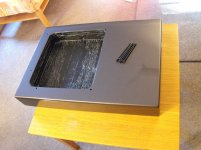
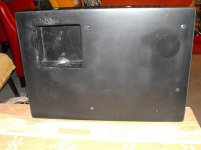
Thanks guys, this is helpful. I was under the delusion my plinth had to be a minimum of 5" (127mm) so was resigned to using threaded rod cut to fit. I ordered the 90mm bolts from McMaster Carr today and will reduce the height of the plinth accordingly.
Another question regarding constructing with Baltic Birch - is it critical what thickness each layer is? Should I use 1/2" vs 3/4" or doesn't it matter?
And is there a preferred glue to use. I thought I read somewhere a poly wood glue is best but damn if I can find that reference again.
Thanks,
Andy
Another question regarding constructing with Baltic Birch - is it critical what thickness each layer is? Should I use 1/2" vs 3/4" or doesn't it matter?
And is there a preferred glue to use. I thought I read somewhere a poly wood glue is best but damn if I can find that reference again.
Thanks,
Andy
Last edited:
One more thing. The bolt for the front left needs to be 5 mm longer than the other four. For some reason the thread is set higher up in the frame casting. You could alternatively countersink the hole 5 mm deeper.I ordered the 90mm bolts from McMaster Carr today and will reduce the height of the plinth accordingly.
I have never constructed a birch ply plinth, but when I was comparing constrained layer damping materials for speaker enclosures, I found PVA glue tested badly compared to other damping layers like glazing silicone. I'm not sure how BB ply is supposed to work in this application. Is it the natural resins in the timber or the glue used in the laminations? Don't depend on the PVA tp provide the damping required for an effective constrained layer.Another question regarding constructing with Baltic Birch - is it critical what thickness each layer is? Should I use 1/2" vs 3/4" or doesn't it matter?
And is there a preferred glue to use. I thought I read somewhere a poly wood glue is best but damn if I can find that reference again.
Use a forstner bit to adjust the pad the bolt head rests on. Put a stop on the drill press so they are all the same length.
I got mine from McMaster Carr also.
Rush
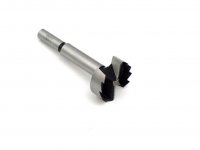
If you don't know what a Forstner bit is:
"This 1 5/16" Forstner bit features a 3/8" shank and is machined from high quality carbon steel. May be used in a drill press and with extra care in a hand drill. These bits cut holes with clean sides and flat bottoms and will not burn if you stay within the recommended speed as stated on the box. The bit has a saw tooth rim to reduce heat and to minimize larger bits' tendency to burn. Overall bit length 3 1/2"."
1 5/16" - Forstner Bit-Traditional Woodworker
Rush
Attachments
I'll make sure I use one of those bits. I'm having the cutting and routering done by a cabinet maker but I'm doing all the legwork as far as plans, materials etc.
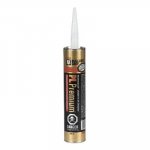
I found the reference to PL glue over at audiokarma. This is the stuff someone said to use with BB ply on a plinth.
I found the reference to PL glue over at audiokarma. This is the stuff someone said to use with BB ply on a plinth.
Attachments
Plinth materials....continued
It may appear I'm dragging my feet on this project, and this is true. But I continue to refine my ideas about plinth architecture. I have no sketches that I'm willing to share with the public domain....yet. That will be coming within the next month. Fwiw, I have determined the overall shape and layout. It is now a matter of working out the numerous details.
One of those details is plinth materials. We've already discussed bentonite filled isophthalic resin as a 'castable' material with excellent damping properties as well as having very good tensile and sheer strength properties.
Another material candidate has been brought to my attention. NAD-11. There is a company in Washington state that produces this. Pyrotek. They are located in Spokane The material is described as a high density cement board reinforced with inorganic fibers.
I understand that Cats Squirrel has already been supplied with a sample but I don't yet see any damping property test results on his website. Meanwhile, the material is claimed to have:
Now if we just knew its damping properties...
meantime I need to make a test sample out of the isophthalic resin with kitty litter.
soon.
It may appear I'm dragging my feet on this project, and this is true. But I continue to refine my ideas about plinth architecture. I have no sketches that I'm willing to share with the public domain....yet. That will be coming within the next month. Fwiw, I have determined the overall shape and layout. It is now a matter of working out the numerous details.
One of those details is plinth materials. We've already discussed bentonite filled isophthalic resin as a 'castable' material with excellent damping properties as well as having very good tensile and sheer strength properties.
Another material candidate has been brought to my attention. NAD-11. There is a company in Washington state that produces this. Pyrotek. They are located in Spokane The material is described as a high density cement board reinforced with inorganic fibers.
I understand that Cats Squirrel has already been supplied with a sample but I don't yet see any damping property test results on his website. Meanwhile, the material is claimed to have:
a density of 109 lb per cu ft.
flexural strength of 4640 lb/square inch
Dialectic strength of 2.9 KV/mm
excellent machinability
etc.
Now if we just knew its damping properties...
meantime I need to make a test sample out of the isophthalic resin with kitty litter.
soon.
- Status
- This old topic is closed. If you want to reopen this topic, contact a moderator using the "Report Post" button.
- Home
- Source & Line
- Analogue Source
- SP-10 mkII, the next project